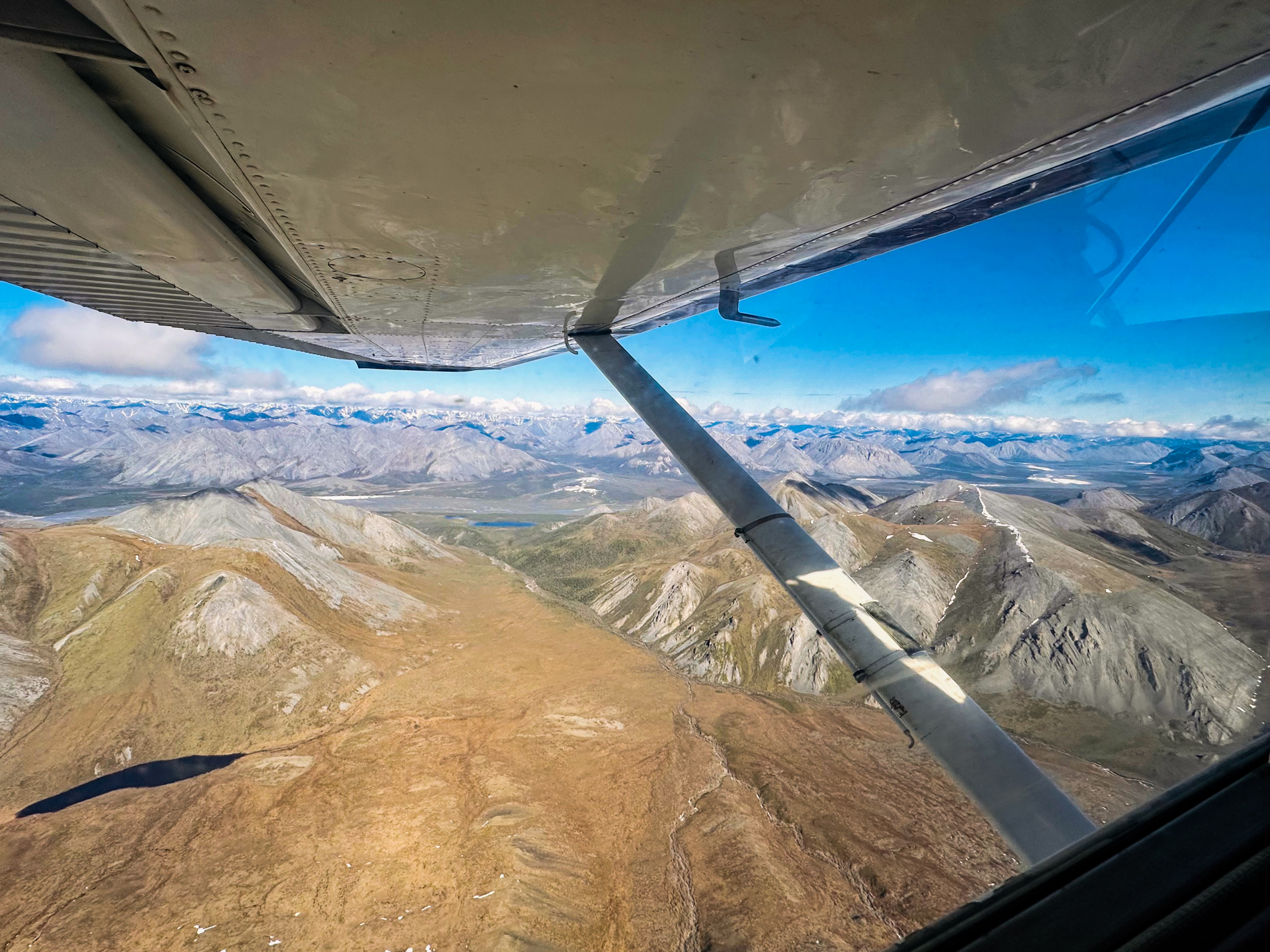
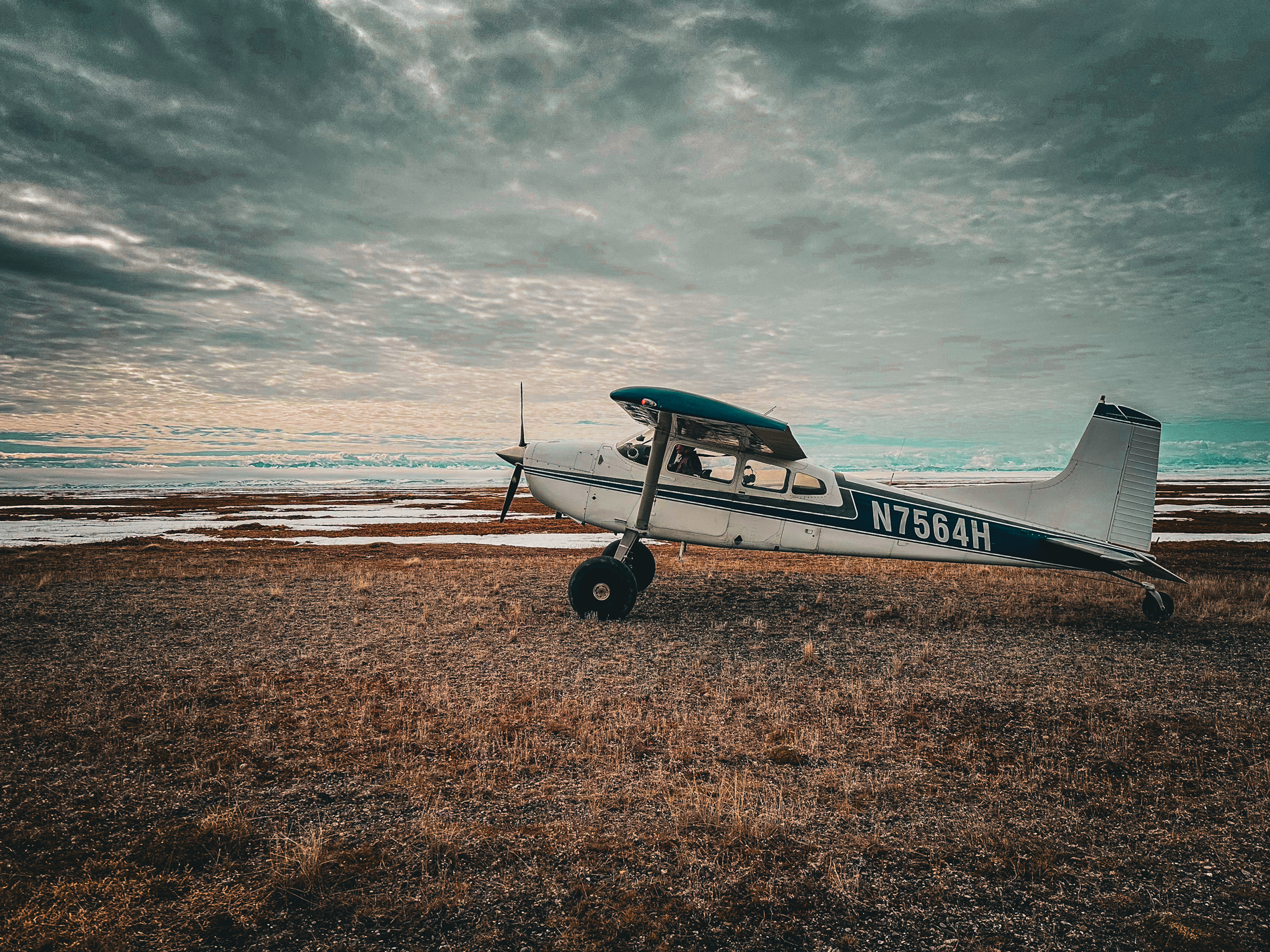
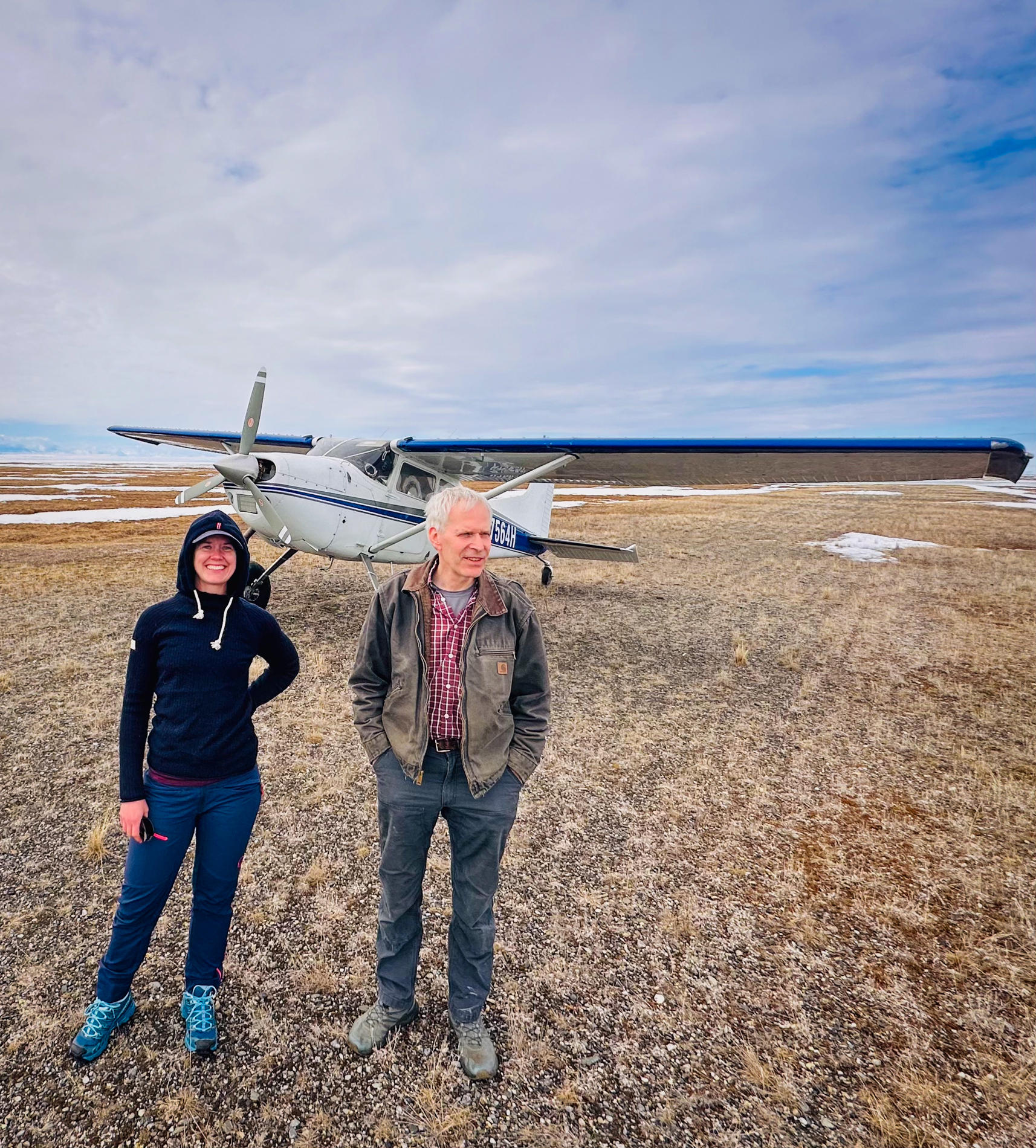
“How does it feel to give up control?” These were some of the final words our pilot imparted on us before leaving Elaine and I alone in the big, big wild. The Alaskan coast on the Beaufort Sea is an intimidating place to get dropped off. Hours earlier we’d been in Fairbanks, a delightful little city but a city nonetheless. We said goodbye to Kirk and watched as he bounced down the tiny tundra landing strip and headed south back to Fairbanks. The drone of his engine was replaced with deep silence.

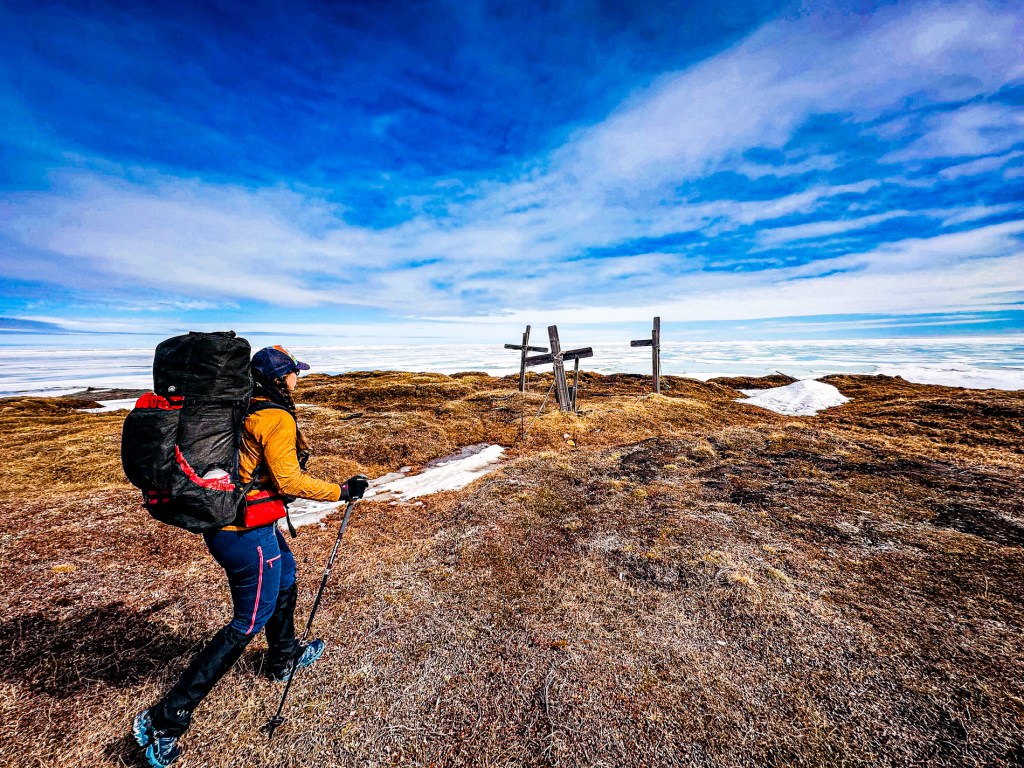
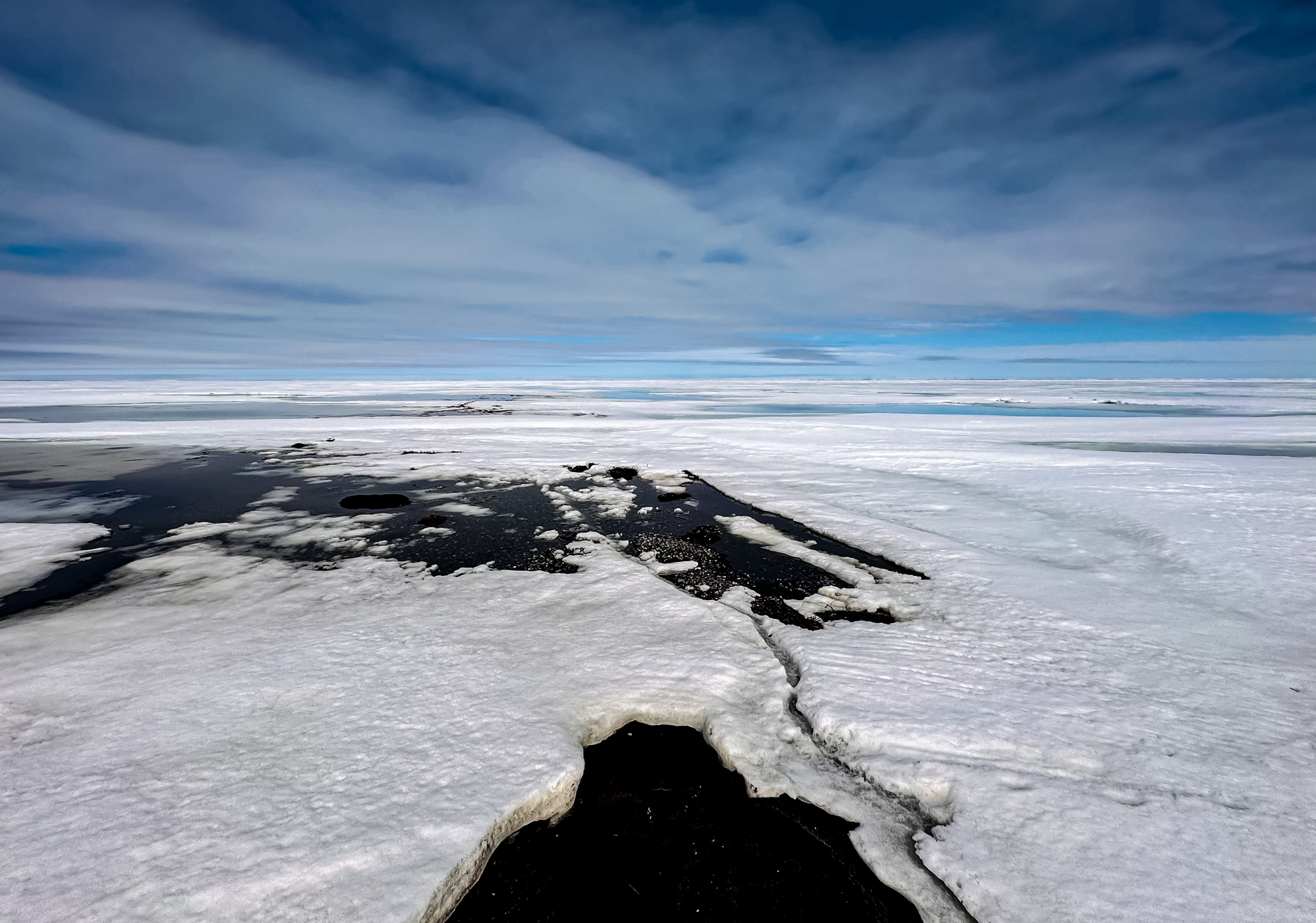
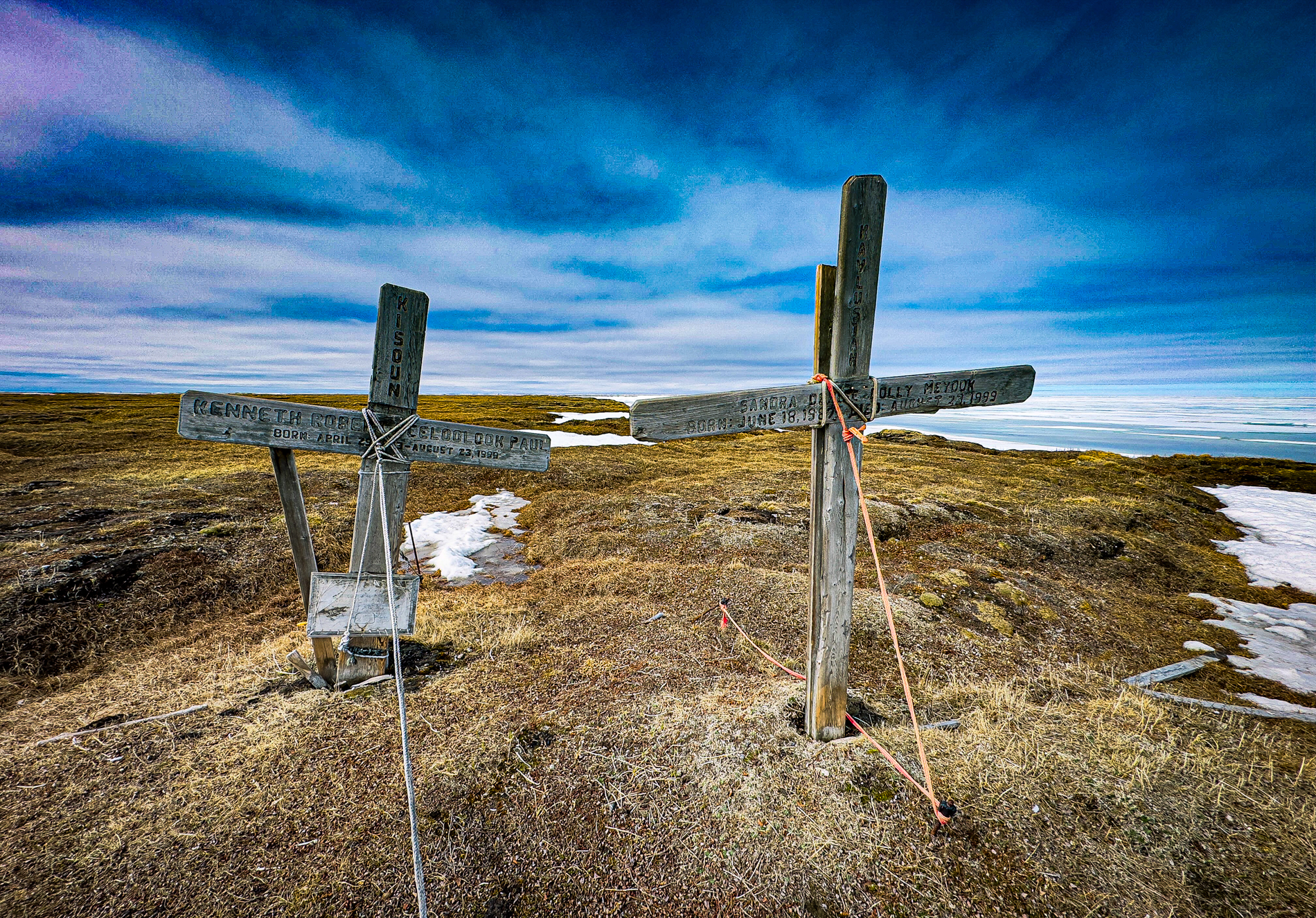
Just off from the runway, a few feet from the ocean, was a memorial for Inuits who died at this spot in a plane crash in 1999. An auspicious place to begin our journey, a true wilderness spot with a history. To the north, sea ice, the Beaufort Sea, the Arctic Ocean, terra incognita. This is the domain of the legends, Amundsen, Perry, Bartlett, Stefansson and others whose names are carved deep in the annuls of polar exploration. If we wanted to go to the North Pole, well, we could start here. The feeling I get when looking north over the Arctic Ocean, over the sea ice, is untamed. It feels invigorating, humbling, fascinating and terrifying all at once.
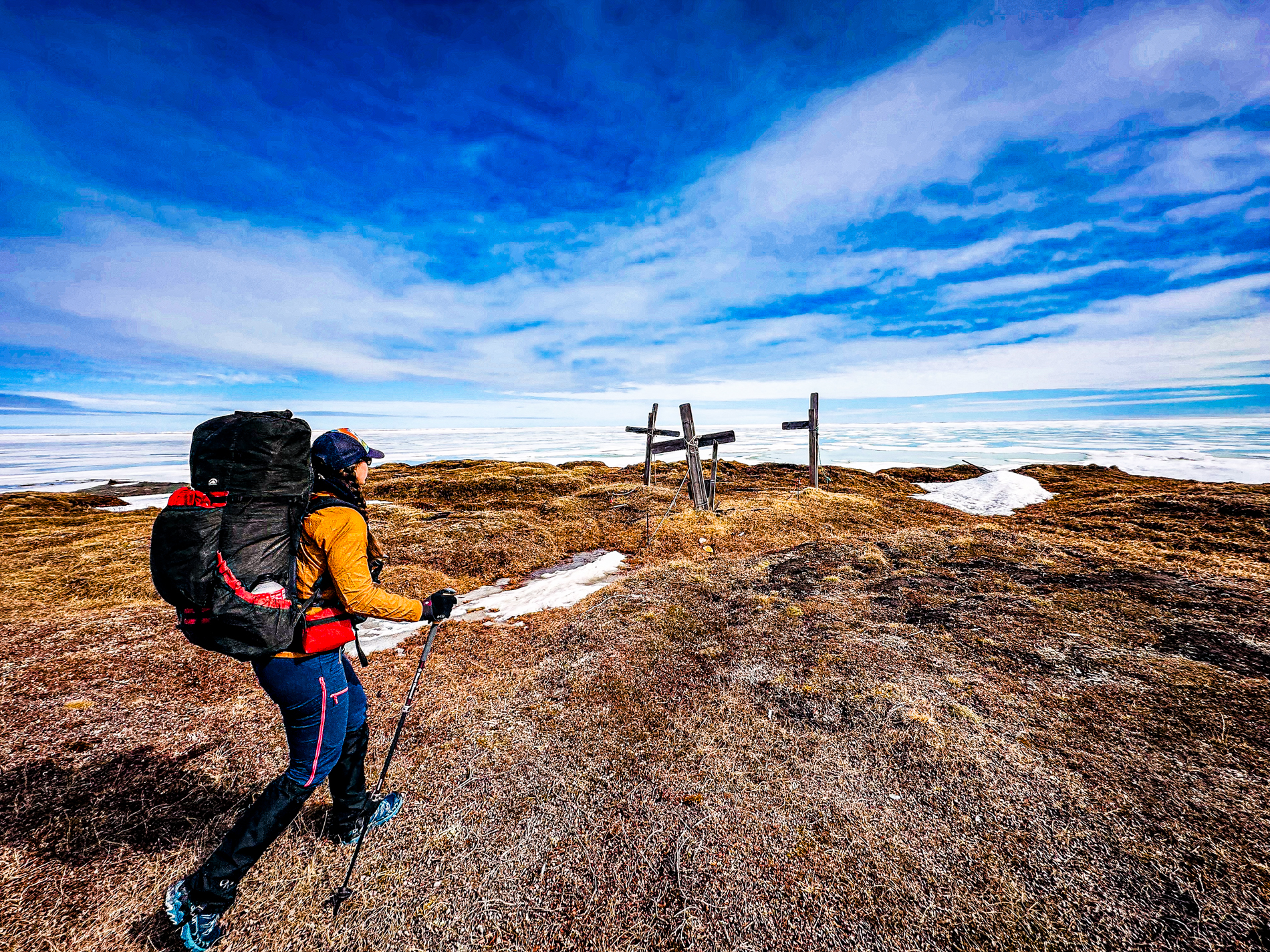
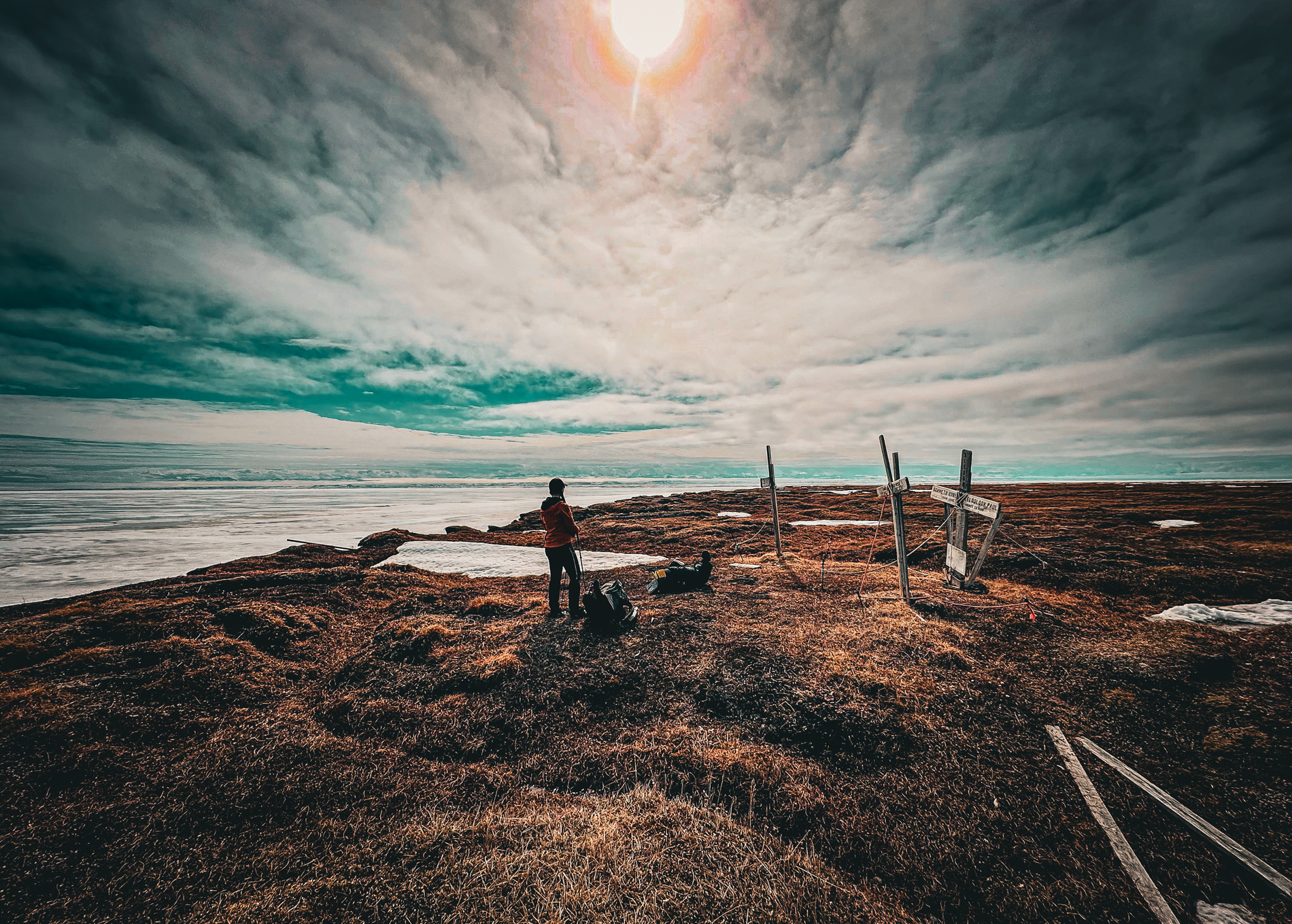
The crash claimed three lives, the youngest age 12, Sandra Denise Meyook. Visit any native village cemetery and it becomes apparent life up here is very hard. Rarely will you find tombstone engravings older than 50 years. These three died on August 23, 1999. I can’t help but wonder what the conditions were like. Was it weather, or a plane malfunction? My wife wants to become a bush pilot and I want that too…but you can’t help but notice what a dangerous profession it is.
After the visit to the memorial, the very northern tip of our adventure, we turned south towards the mountains. This trip will be a longer wilderness adventure, and if all goes well we should get to spend 60-70 days in the wilderness and not have to visit any town or civilization. When I first started backpacking, the lure of the town, the burger, the shower and a warm bed was addictively strong. I’ve learned that town offers little that nature does not provide. If you’re smart with your food rations, you can eat well and stay strong. Rivers and creeks offer invigorating bathing opportunities. With the right gear it’s easy to stay warm. Our main goal for this trip is to live out here and be comfortable. We plan to be nomadic wilderness travelers whose home for the next ten weeks will be the Arctic National Wildlife Refuge.
The first part of our trip takes us from the ocean to the northern front of the Brooks Range Mountains. The area we’re in is something called the 1002 zone. This is the zone in the Arctic National Wildlife Refuge that would open to oil drilling if the wrong politicians, combined with national factors like oil shortages, or a war converged. Politicians in favor of drilling say it’s a wasteland sandflat. We’ve learned not to believe politicians, so we decided to see for ourselves.
Based on topographical maps, this is not a good area to walk in. The maps show endless tiny ponds and swamps. On June 8 though, the tundra was still frozen, and while we certainly got our feet wet, we never sank more than a few inches down. The stress of the day, combined with sunshine and the lingering effects of plane sickness eliminating Dramamine, left us exhausted, so we laid down on the tundra to take a quick snooze. When we woke up, a short-haired owl was hovering over us, wide-eyed and round-faced, I suspect evaluating if we were dead and it had just scored the best scavage of the spring! When we woke up and said hello, it flew off, looking for ground squirrels and such.
The land was hardly a barren wasteland. We were serenaded by birds the entire time. The prominent bird was the Lapland Longspur who have a beautiful song, like a subtle robin. Snow geese squawked along, and snowy and short-eared owls darted across the tundra. We were startled more than a dozen times by the frantic flapping of willow ptarmigan. This is where all these birds come to breed, fueled by a massive menu of insects. Without a healthy and wild North Slope, where will these birds go?
I made a mistake at the end of this first day. It’s always jarring to go from civilization to the wilderness, but to go from a city to the arctic coast put us in an environment that I wasn’t quite on the right mental wavelength to evaluate. There was a river that we “kind of” had to cross, though not really. It was where our pre-planned route had us going based on satellite imagery, but in retrospect, we could have just followed the river south to its headwaters and been fine.
The river was different from rivers I’d seen before. It was maybe thigh-deep, and not moving particularly fast. The bottom of it was entirely covered in thick ice, so the river was flowing on top of frozen blue ice. Ice chunks were also flowing down the river, so crossing it would not be a warm affair. The bottom was slicker than a hockey rink, so we put on our Kahtoola microspikes. These worked well, the traction was good but our feet were getting alarmingly cold and non-functional a few minutes into the crossing. Just beyond halfway through the crossing I took a step and dropped a good two-feet down above my chest. There was a hole in the ice the river was flowing on. The water was so cold it was hard to breathe, but when Elaine said, “Dan, please get up,” I mustered all my strength and did just that. There was an adrenaline spike and we debated going back, but we were getting dangerously cold and it was longer going back than going forward…assuming the river didn’t deteriorate into a series of holes. We continued on, probing with poles and then stepping on ice we were sure was solid. It was slow going but it went and we crossed without further mishaps. Honestly, we were lucky – if that hole had been six feet deep instead of two it might have been a very different story.
We hiked quickly and warmed up relatively well, but I was still shivering when we came to another shorter ice-covered crossing. Because I was shivering, I slipped on a frozen rock and went down on one knee, but these are not mistakes either of us can afford to make out here. I was pissed off at myself. In my journal I wrote, “Two mistakes that simply cannot happen in this environment. Mildly hypothermic, cold and wet tonight. Mentally doing OK but I must do better. Mood? Settling in for a long trip. Lots of stressors before heading out, nice to be quiet here, get in a zen place with Elaine. Must read the land and adjust plans better. Time for bed. Better day tomorrow.”
We ended up camping after my second slip because I was not warming up and a brisk wind was coming from the north. We’d hoped to go further and get away from deep polar bear terrain, but at this point, hypothermia was a bigger risk than a polar bear. We’d seen no bear tracks today so at least there probably wasn’t one roaming in the direct vicinity. We got the shelter up quickly, and Elaine finished the set-up while I put on some dry clothes and crawled deep into the sleeping bag, She cooked an amazing dinner with hot tea and I was quite warm before falling asleep. I definitely don’t want to be a burden on day one, and I promised myself I would make it up to her in the weeks and months ahead.

 Alta Backcountry
Leave a comment