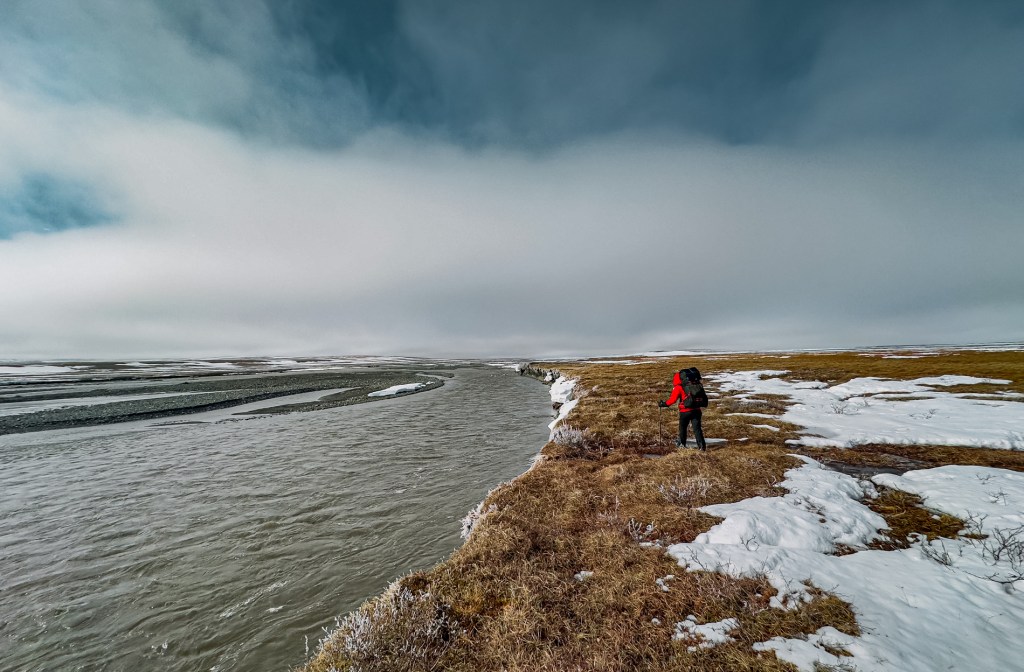
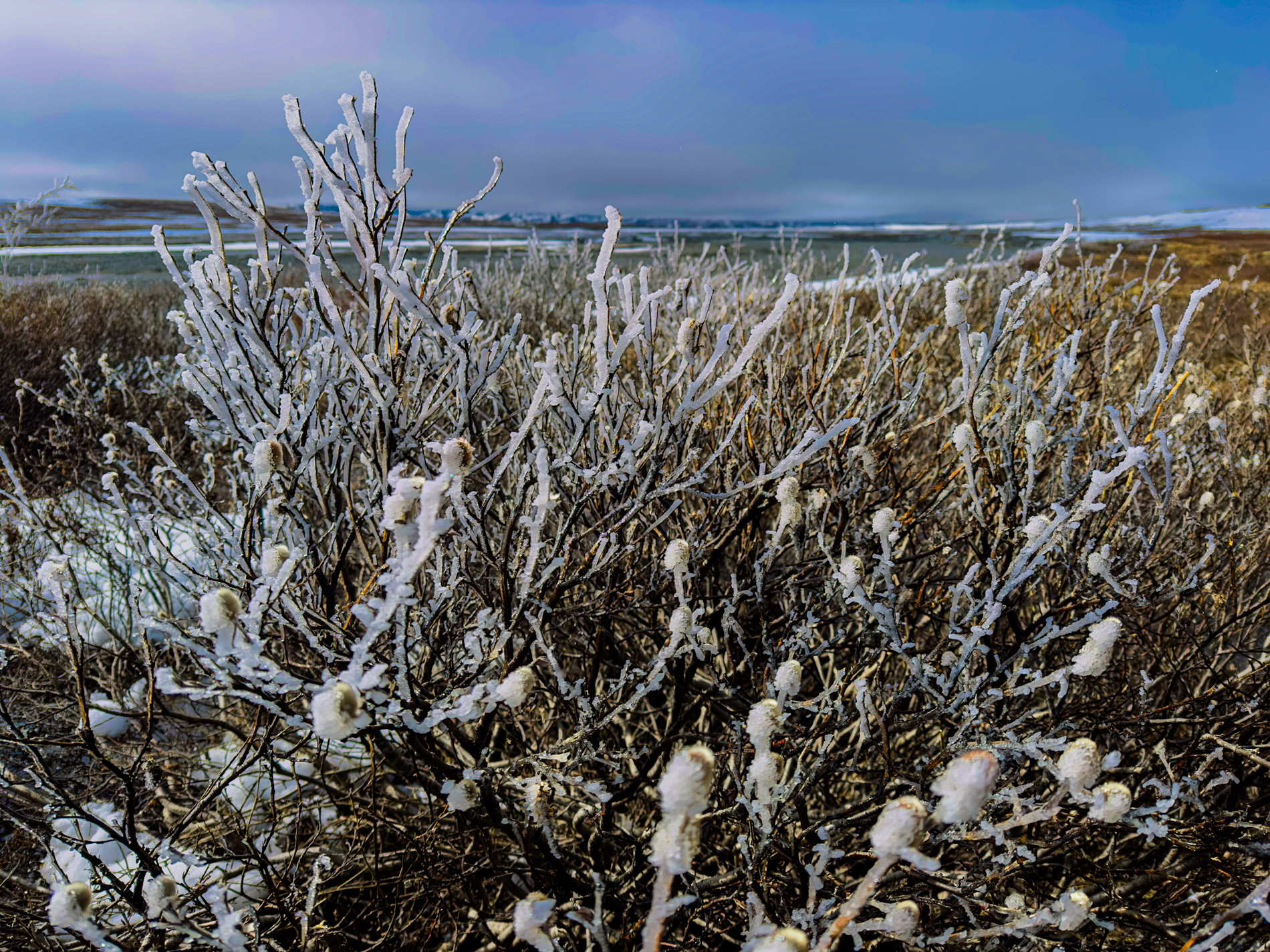
June 11 on the North Slope is not like June 11 in most places. We both woke up around 3 am cold in our sleeping bags. They are rated to 20° and we were bundled up in wool from head-to-toe, so it must have dropped well below that. The world was covered in a light film of ice this morning. My long johns, hiking pants, sweater, rain gear, heavy mitts and ski cap felt under-gunned even while moving. So it is in the Arctic. The willows along the river shimmered with crystalline ice hanging off the branches. At one point, snow started swirling around the air, turning to fine particles of ice, and the world sparkled. The sun broke through the clouds for a second, turning that sparkle into a blinding disco ball of light.
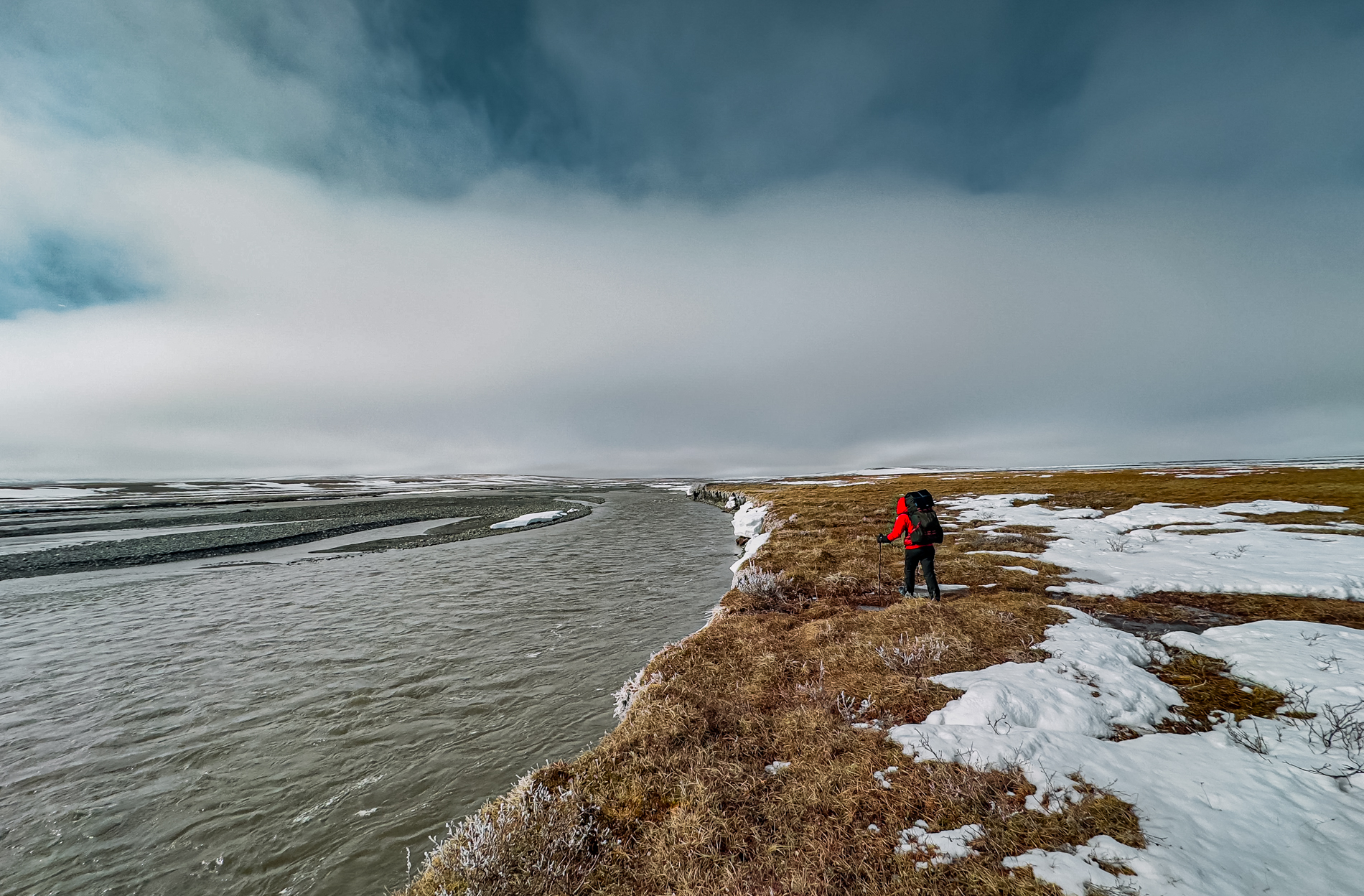
Willow ptarmigan were active this morning, bursting into an explosive wing flap as we passed, always a surprise. Their plumage is conflicted like the season, old white feathers being replaced by blotches of brown and olive. The mighty river we’re walking up rolls in the opposite direction, draining the northern slopes of the Brooks Range into the Arctic Ocean. The walking along the river bank is smooth and solid, some of the best we’ve found since the trip began. But nothing is static here. It turns to large basketball-sized tussocks, so we wind our way through them. At least the ground is firm. Walking on soft, mid-summer tussocks requires an entirely different walking technique, less muscle, more of a lanky gait, a practice in patience. Firm tussocks are more like a slalom course, twisting and turning through the tundra mounds, one direction then the next.
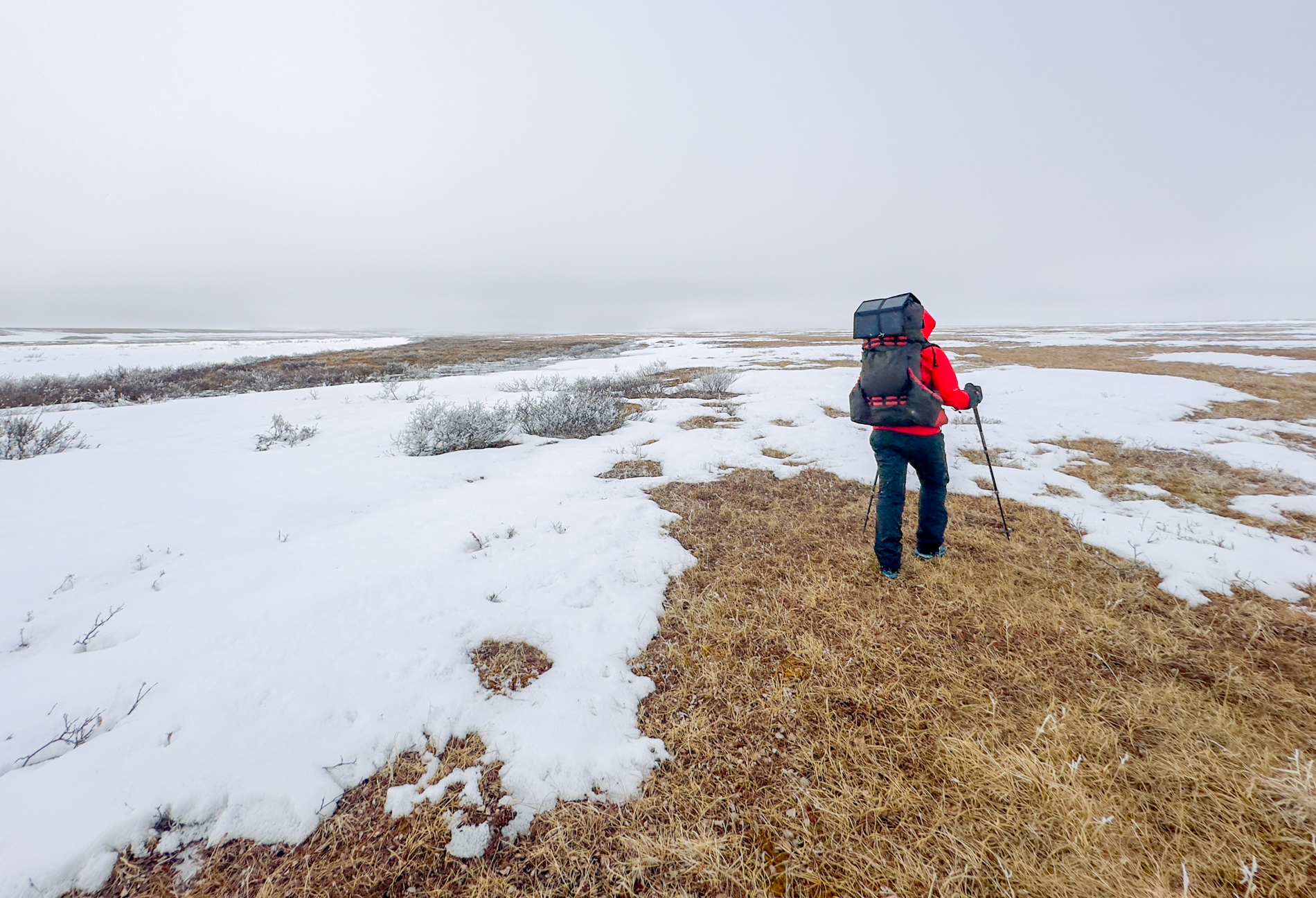
The river is a half-mile wide and filled with aufeis. Aufeis is caused by the river freezing, and then fresh water overflowing, freezing again, and so on. This process can go on all winter and create thick shields of ice that take the entire summer to melt. Aufeis can make good travel, but on this day when the temperature is staying below freezing, walking on ice with a sharp northern breeze is unappealing and, more importantly, unnecessary. We divert up a small ridge to avoid the big river, butt slide down a section of ice straight into a smaller river, cross out the other side and keep climbing. From here, we can see the Brooks Range in her full regalia, vertical and immovable, but we will not get there tonight.
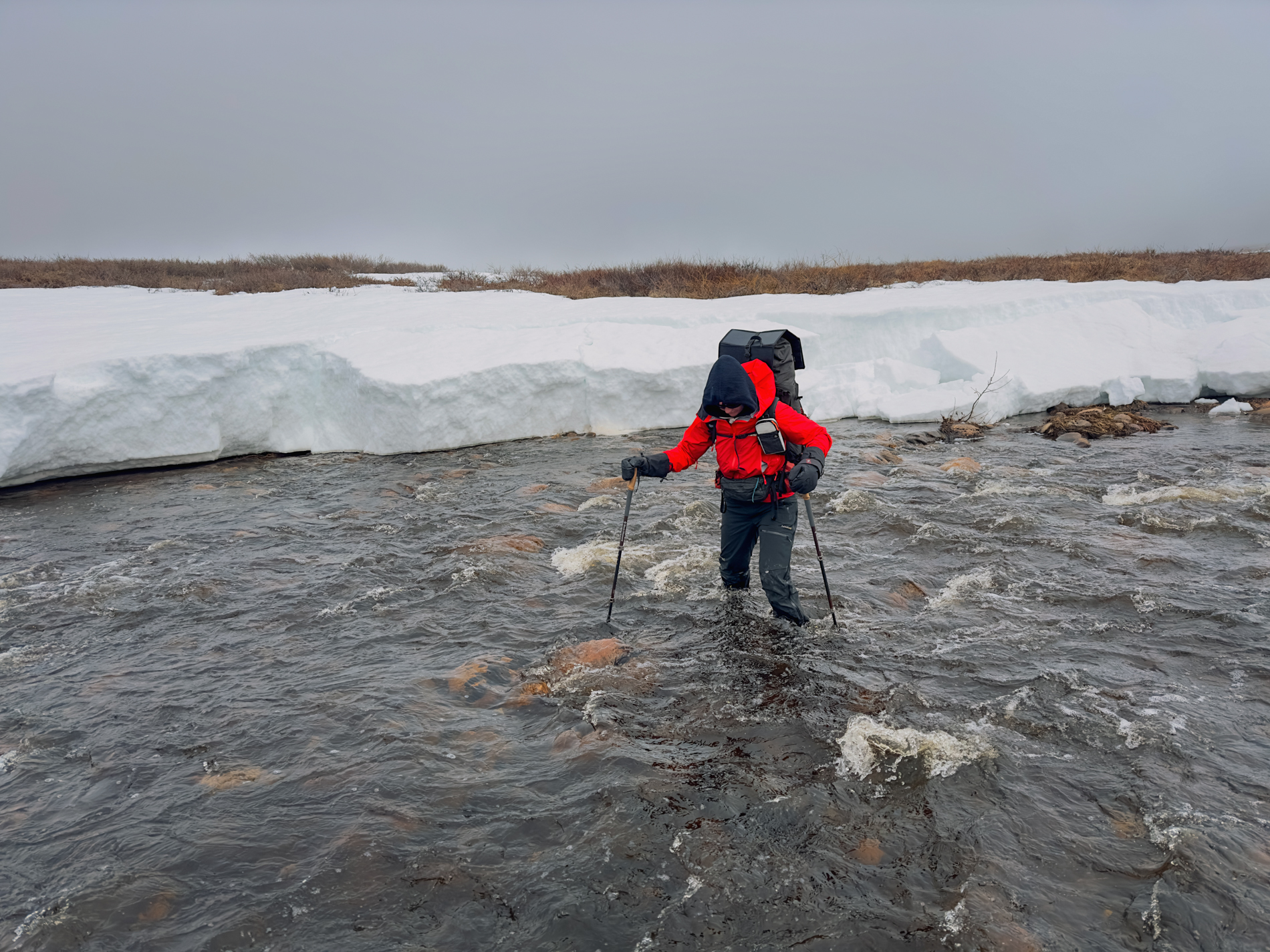
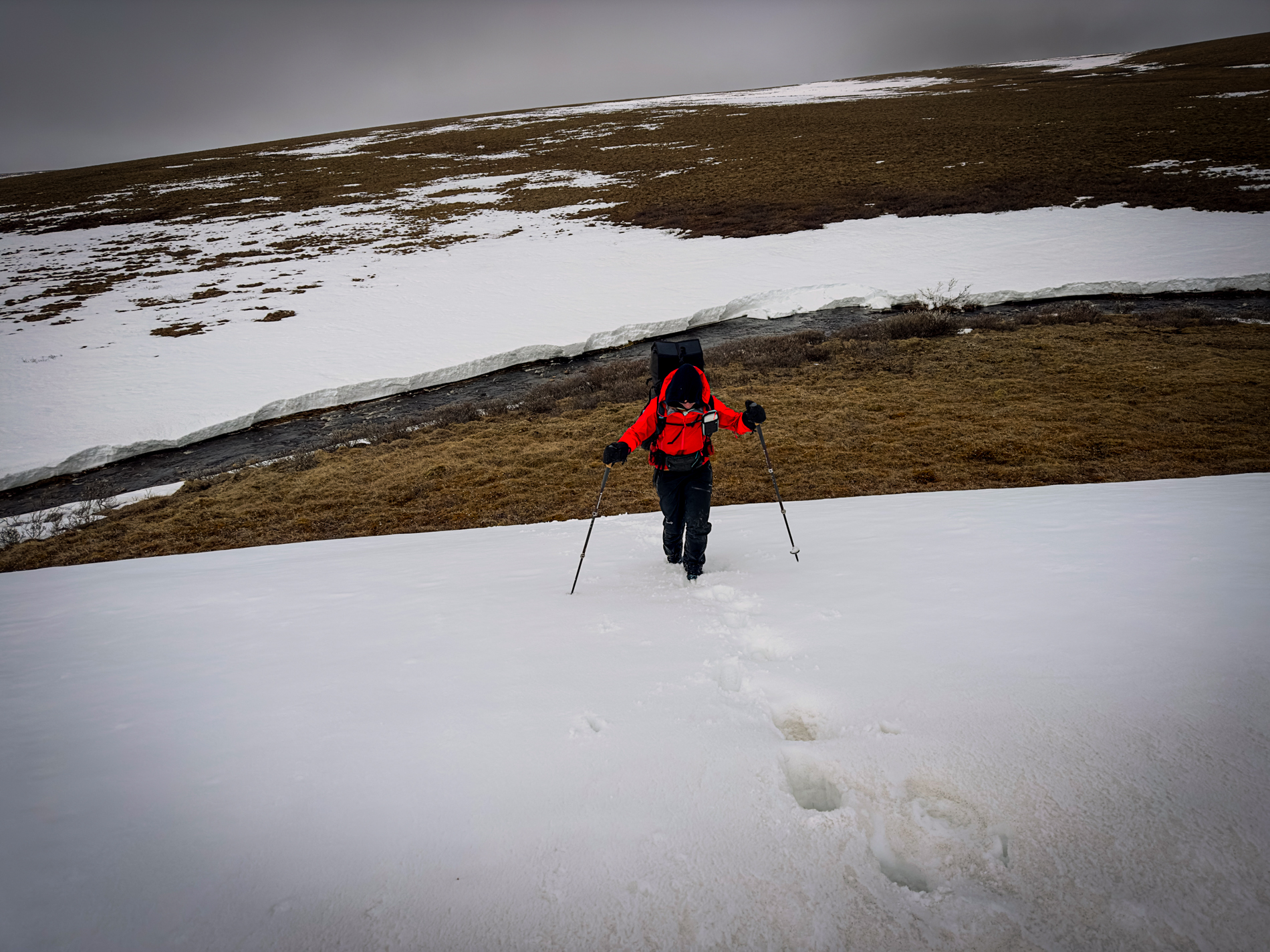
Below our ridge on the river, caribou walk unconcerned on the aufeis, jump off ten-foot ledges into the mighty river, swim across, and then do the opposite on the other side, for some mysterious reason needing to cross. Caribou make us look like lumbering rhinoceroses. Caribou, with their long legs, wide hoofs, massive lungs and powerful frames were built for this land. They are a throwback to the old Pleistecine age, one of the very few animals that is the same as they were two million years ago. The Mastedon, Woolly Mammoth and Short-Faced Bear are extinct, but the Caribou persevere.
The ridge leads us to the very foothills of the Brooks Range. We’ve been climbing slightly every day, but now the slope sharpens a bit, a gradual increase in steepness with every mile covered. We’re not in the mountains yet, but we’re getting close. We stop and watch a screaming Swainson’s Hawk circle and dive bomb the tundra hunting shrews and arctic ground squirrels, take off straight into the sky and fly north along the river, a thousand feet up, majestic, smooth and confident, occasionally flapping its wings but mostly sailing in the currents.
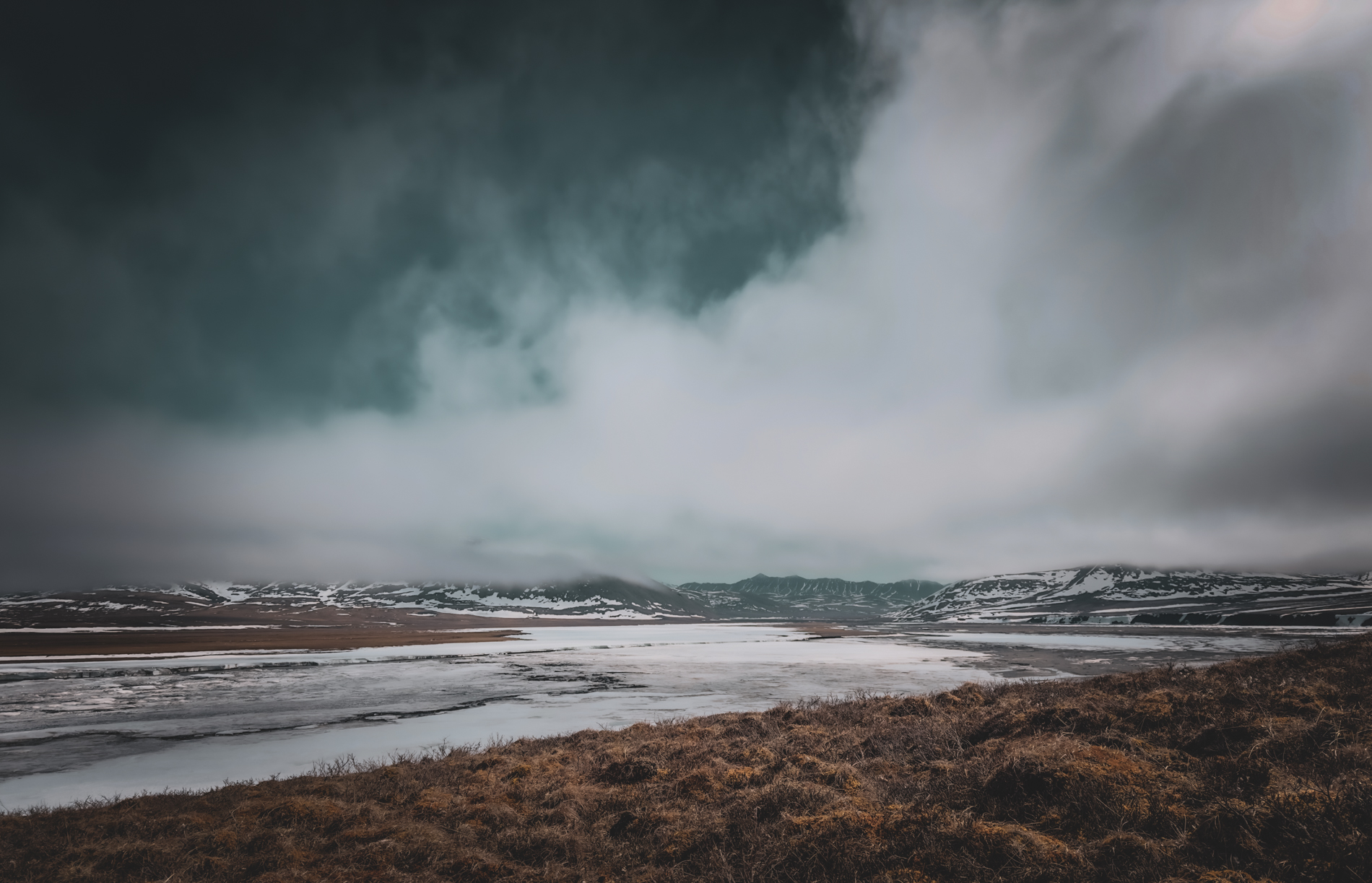
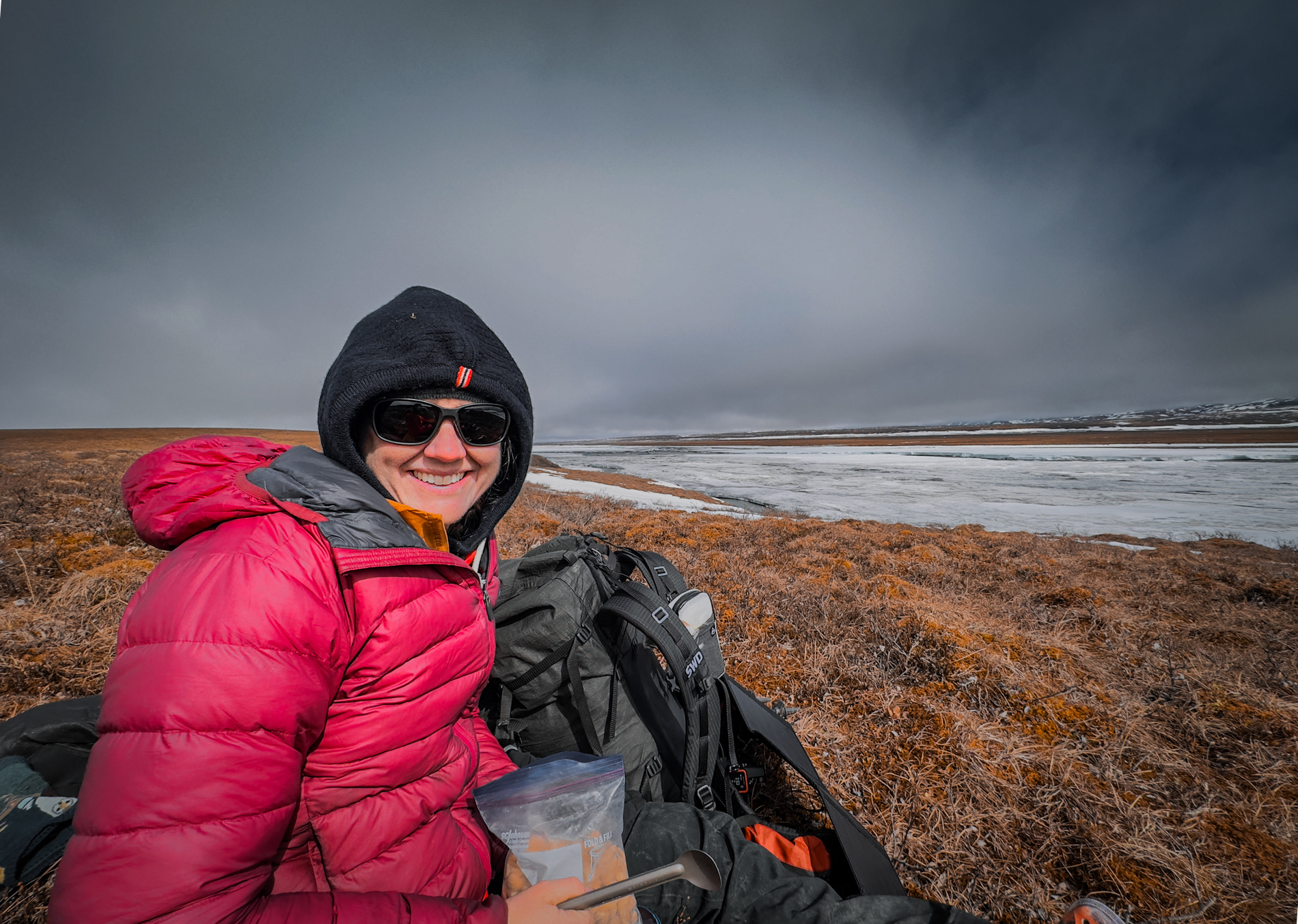
The tussocks continue and camping is challenging to find. We find a small 6’x6’ section of relatively smooth tundra, and while it is slopey it’s the best option around. Access to water requires crossing a hundred-yard-long section of mushy ice snow, and then trying not to fall into the creek that flows with ice and slush. I volunteer for the task, remembering that promise I made after day one to Elaine.
We boil water in the stove, and enjoy a hot dinner of rice and beans, tea, and ginger candies. I feel contemplative tonight. This place has already affected me, and I’m beginning to feel a love for it. The North Slope is spectacular, and it is alive. We’ve now walked from the sea to the mountains in the controversial 1002 zone. Claims that it is a barren wasteland are wrong. Here I have experienced more bird life than anywhere else I’ve been on earth. Caribou, bears, musk ox and wolves live here. It is a beautiful, silent, and innocent land and it will not fare well against our machines, our drilling, our extraction. Places like this almost don’t exist on the planet anymore. It is a place of reverence, and I believe with every fiber of my being that it should be treated as such. It should be left wild, and it should be left pure.


 Alta Backcountry
Leave a comment