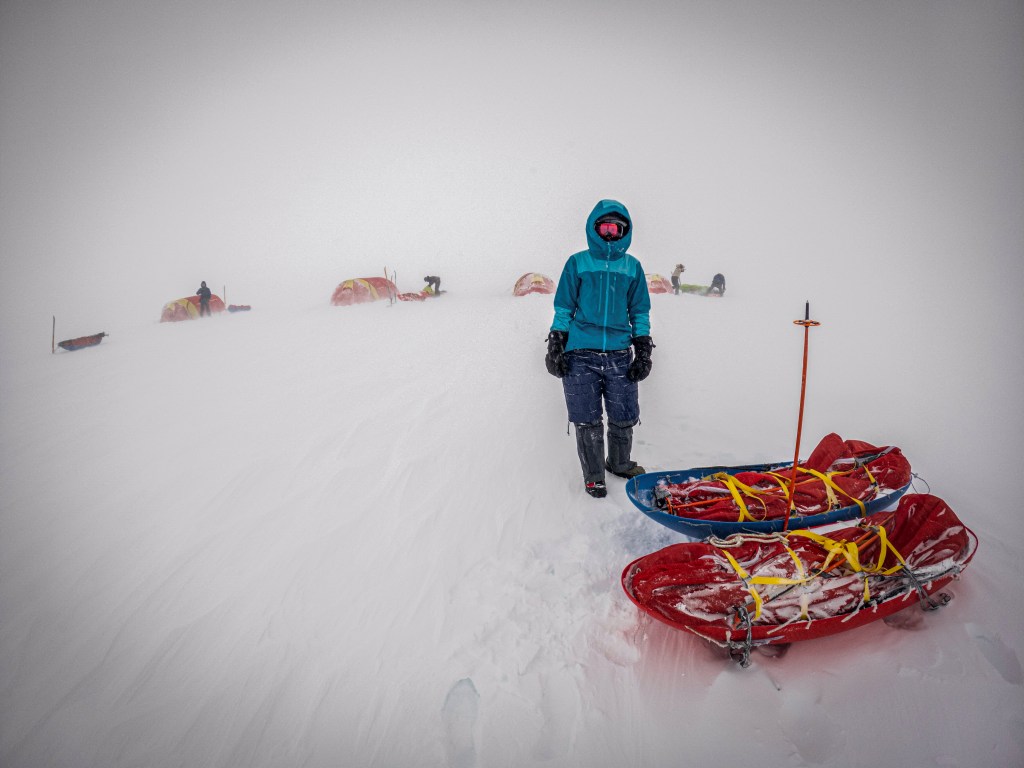
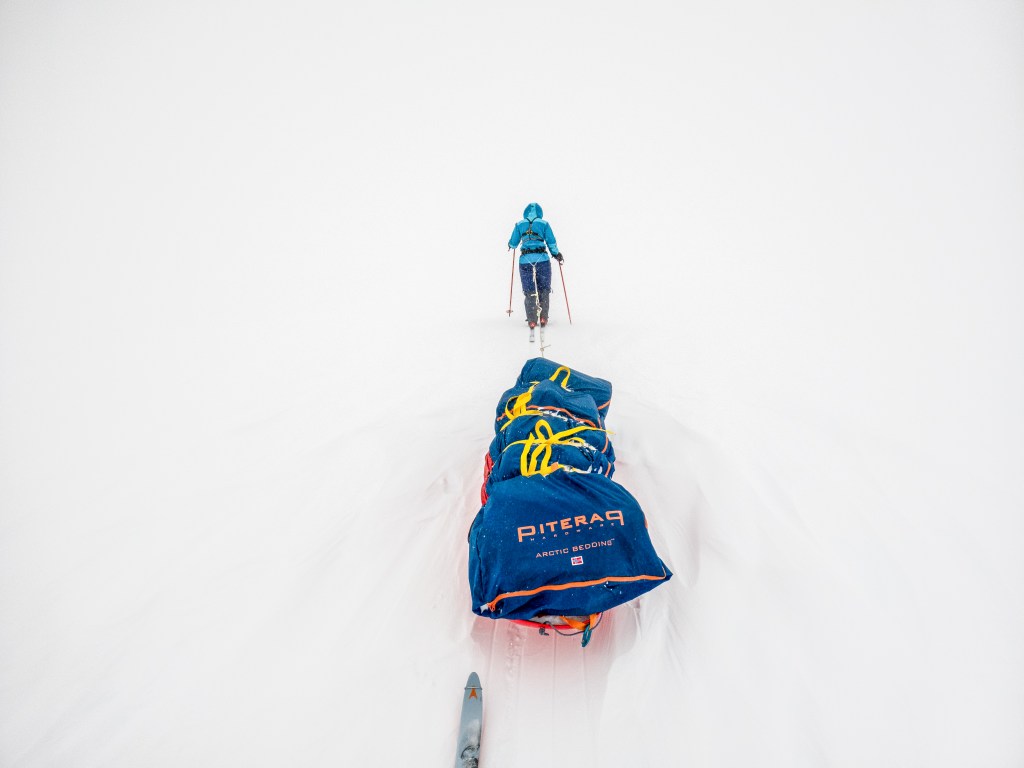
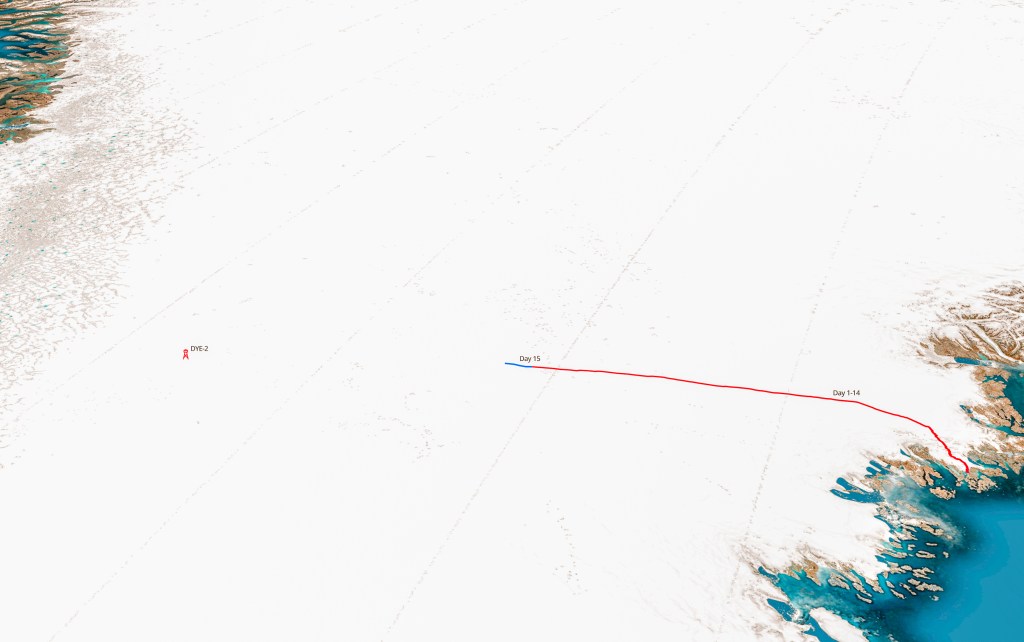
August 29. 13 km. Camped early in severe wind.
The day began badly and never recovered.
A strong east wind hammered the icecap the moment we stepped outside the tents. Snow streamed sideways and visibility collapsed. Early on, my sled returned to its old habit of tipping. On a calm day that’s manageable. In these conditions, it was a real problem. I did the only thing available: right it, adjust the load, and keep moving.
Elaine led the first stretch well, steady and controlled despite the wind. I followed for the next shift, and by then the tension was already building. Eating was difficult. Transitions took forever. Every small delay compounded the next one. Efficiency mattered today, and we weren’t getting it.
Then things failed.
It started with Elaine struggling to release a ski. A fluke, we thought. But at lunch the full picture emerged. No one could get out of their bindings. The east wind had driven snow and ice up under our boots all morning, freezing solid inside the toe pieces of our NNN BC bindings. Eight experienced skiers reduced to rolling in the snow in near-gale conditions, prying and swearing in disbelief.
I worked at mine with a knife for fifteen minutes in the wind. Someone suggested hot water. It helped on one ski. On the second, a piece of the binding snapped off. Elaine was stuck in both skis. The Norwegian brothers each had one trapped. No one had seen anything like it.
Eventually I took my boot off with the ski still attached and hobbled into the shelter on one ski. Elaine ended up wearing Arjen’s camp booties with her ski boots still frozen into the bindings. It was absurd and unsettling.
The takeaway was more nuanced than a simple equipment failure. NNN BC bindings are standard fare in the polar world, and many teams rely on them successfully. But on this day, the combination of sustained east wind and the particular moisture content of the snow created a perfect storm. Snow was driven up under our boots, froze in place, and turned a routine transition into a serious problem. In those conditions, the system struggled at the one thing it absolutely has to do: let you step out. It made me miss the old three-pin bindings. Heavy. Crude. Nearly indestructible. Sometimes simplicity matters most when everything else is going sideways.
With the wind increasing and no one able to reliably step back into skis, the decision was obvious. We camped early.
Setting up required everyone. The wind was strong enough that a loose tent would have been gone in seconds. We held poles, anchored lines, shouted into the noise. Once the tents were secure, the edge finally came off the day.
That evening we shared dinner with Arjen and Caro, the four of us tucked into the tent while the storm snapped and rattled outside. There was a lot of laughter. The kind that comes not from things going well, but from recognizing the absurdity of where you are and what you’ve chosen to do. Nobody was surprised by the day. We had signed up for this, and here it was.
What stood out most was how fragile everything felt. Out here there is no conquering. The icecap is powerful and indifferent. It allows passage when it’s kind, and it can stop you completely when it’s not. Every system matters. Every small failure has consequences.
We moved thirteen kilometers. No one was pleased about it. But we stopped when we needed to.
Tomorrow, we try again.


 Alta Backcountry
Leave a comment