September 2
It rained all night.
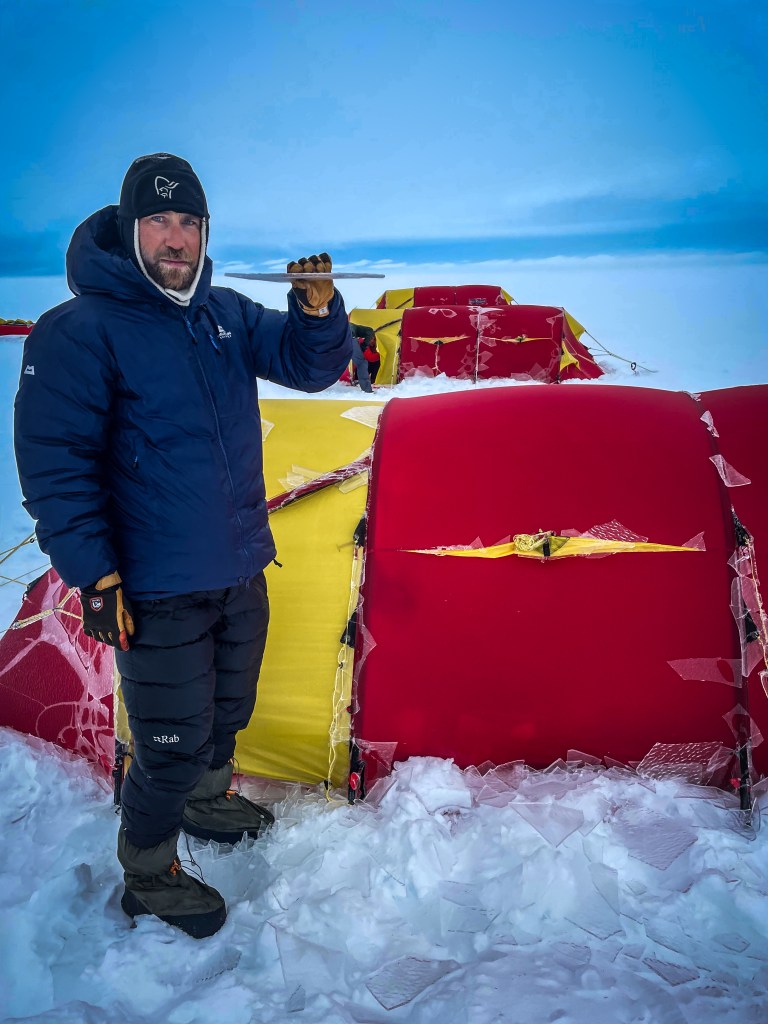
By morning, we were sealed in. A half-inch of ice had encased the shelter, locking the fabric stiff and brittle, zippers and guy lines frozen solid, stakes buried under a glazed crust. It felt less like waking up in a tent and more like waking inside a mold. Knocking ice off without tearing fabric took patience. Pulling pegs free was slow, deliberate work. For a while it felt like the icecap had made the decision for us: you’re not going anywhere yet.
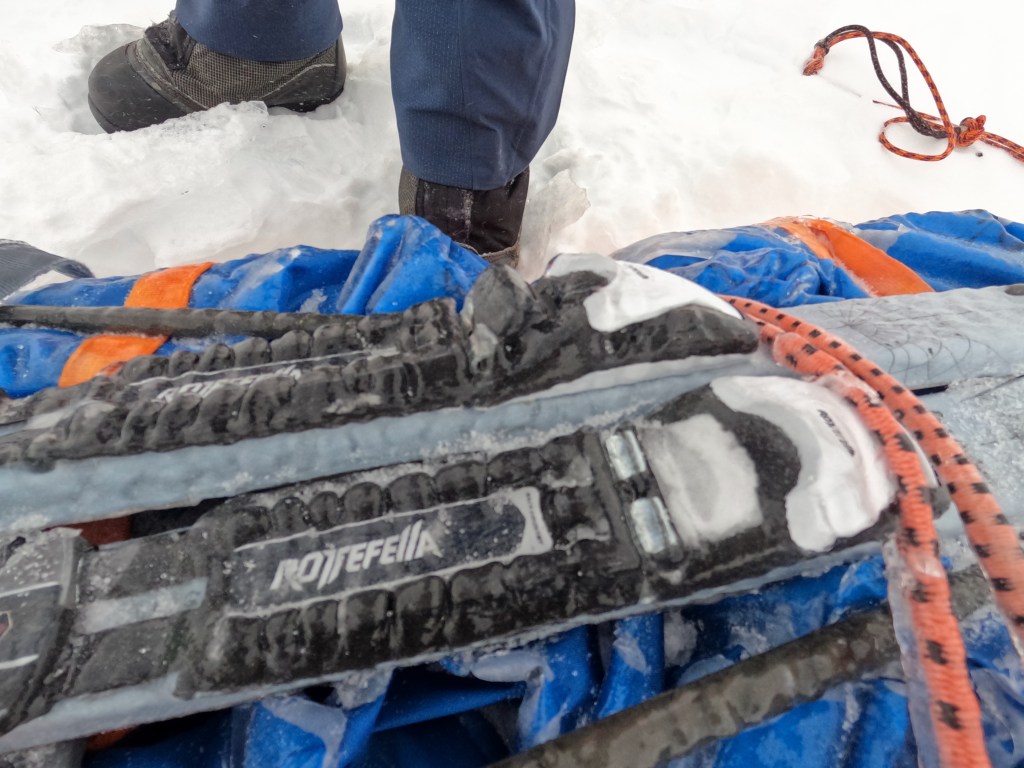
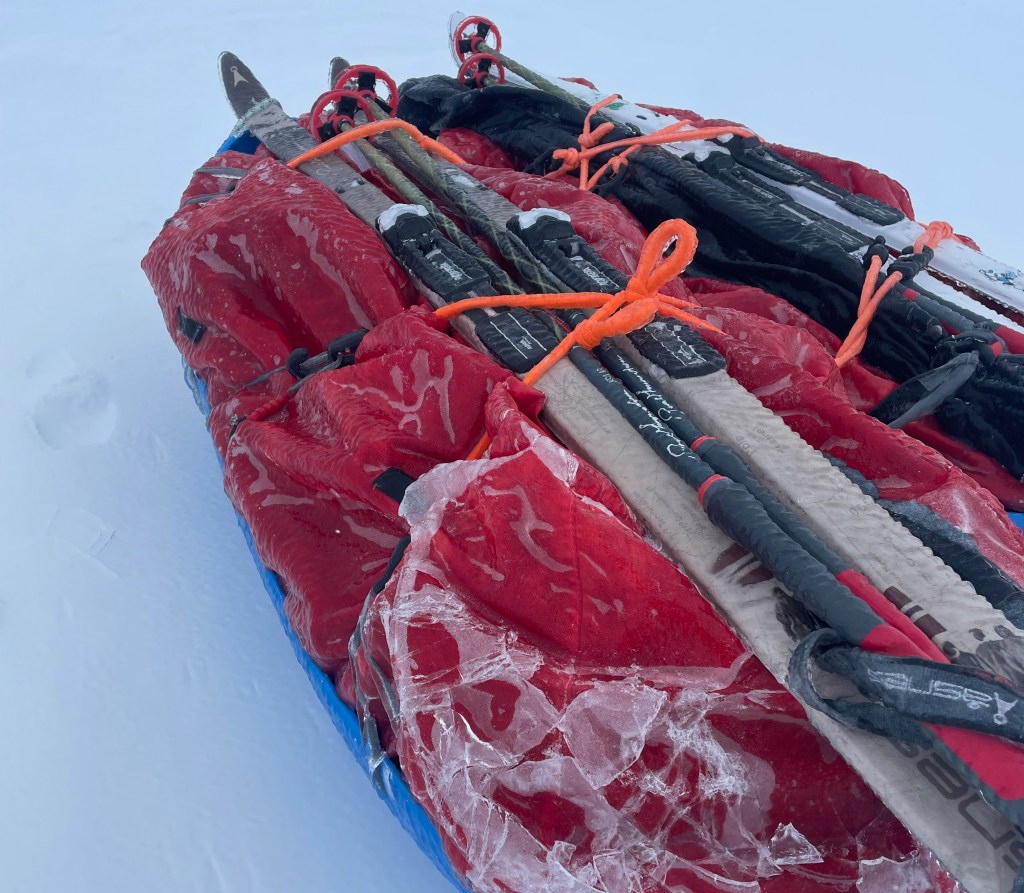
When we finally did get moving, the Greenland Ice Sheet had turned into glass. A hard crust sealed everything in place, and skiing felt like crossing a frozen lake, fast and unforgiving. As long as you stayed upright, the travel was effortless. The icecap had become a hockey rink.
We covered roughly 25 miles in six shifts, moving faster than we had the entire trip. The snow stayed firm through most of the morning, only turning slushy during the final shift. It was one of those rare polar contradictions: miserable conditions paired with exceptional travel. A day where progress comes easily, but comfort does not.
The rain came with a strong southeast wind, blowing directly into us. Everything got wet. Not damp. Soaked. Water pooled in the bottom of the sleds by day’s end, sloshing with every step. Gore-Tex gave up early. Gloves were useless. Layers clung heavy and cold. By afternoon, it was less about staying dry and more about managing saturation.
Some good decisions paid off. Elaine and I, along with Eirik and Sigurd, packed our Arctic bedding inside the sleds rather than on top. Everyone else’s sleeping bags were completely soaked by the end of the day. Small choices matter out here, especially when the weather turns volatile.
Travel remained fast but tricky. Pure ice at the start demanded balance and attention. A fall would have been costly. The group moved deliberately, quietly, each person absorbed in the work of forward motion.
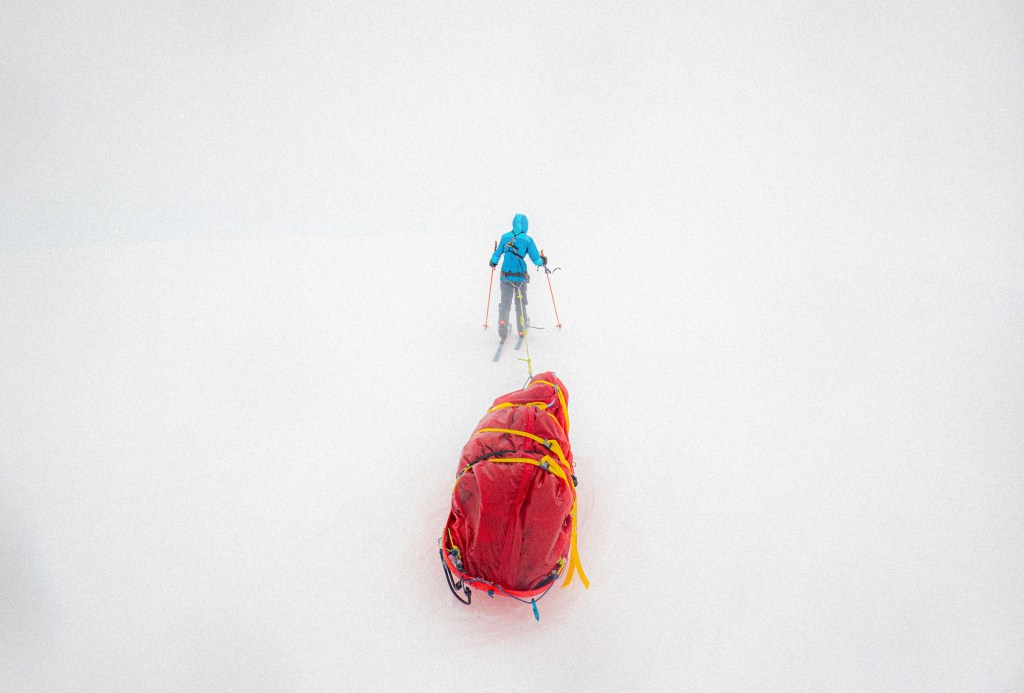
At one break, Elaine laughed and said this might be the most fun day of the trip.
I don’t think anyone else agreed, but I knew exactly what she meant.
There is a particular joy in being fully committed to bad weather, the sailor’s instinct. You stop wishing for comfort and start working with what’s in front of you. The storm sharpens everything. Focus narrows. Doubt evaporates.
Elaine and I took a couple of long pulls straight into the wind. I felt strong. Stronger than I expected to feel at this point in the crossing. I thought about my dad, and for reasons I can’t fully explain, it felt like he was close by, watching. I also thought about old friends and wondered what they were doing that day. Then I laughed at myself. Who knows. Who cares. I was crossing the Greenland Ice Sheet in the rain and still had something left to give.
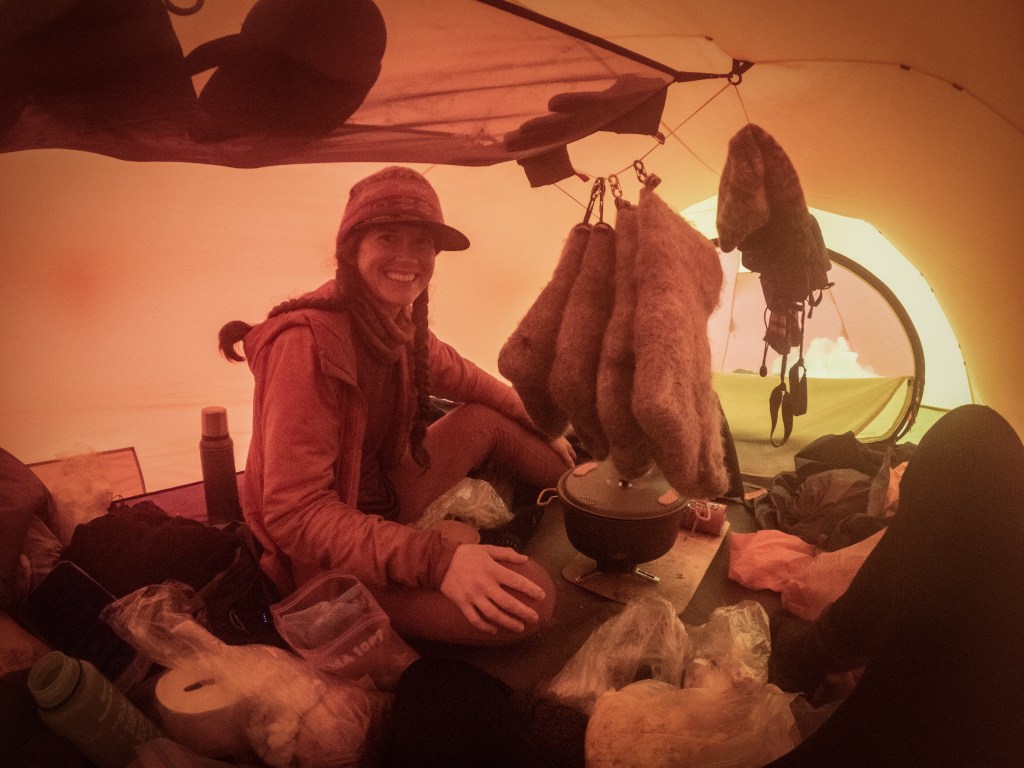
We stopped a shift early to camp. Setting up in the storm was its own challenge, but the shelter went up and we lit the stove inside. An open flame in a fabric tent feels sketchy anywhere, but this is how arctic travelers dry their gear. Steam filled the air. Socks, base layers, gloves, everything hung where it could. We probably killed a few brain cells breathing fumes, but the alternative was sleeping wet.
The tent smells strongly of wet wool, a smell that, for some reason, pulls me straight back to childhood. Night skiing. Lodges. Being five or six years old, damp and tired and completely content. Funny how that carries through a lifetime.
The storm howled outside while we worked quietly inside the shelter, tending gear, tending ourselves. Another hard day done. Another lesson delivered. Greenland had made its point, and tomorrow it would almost certainly make another.
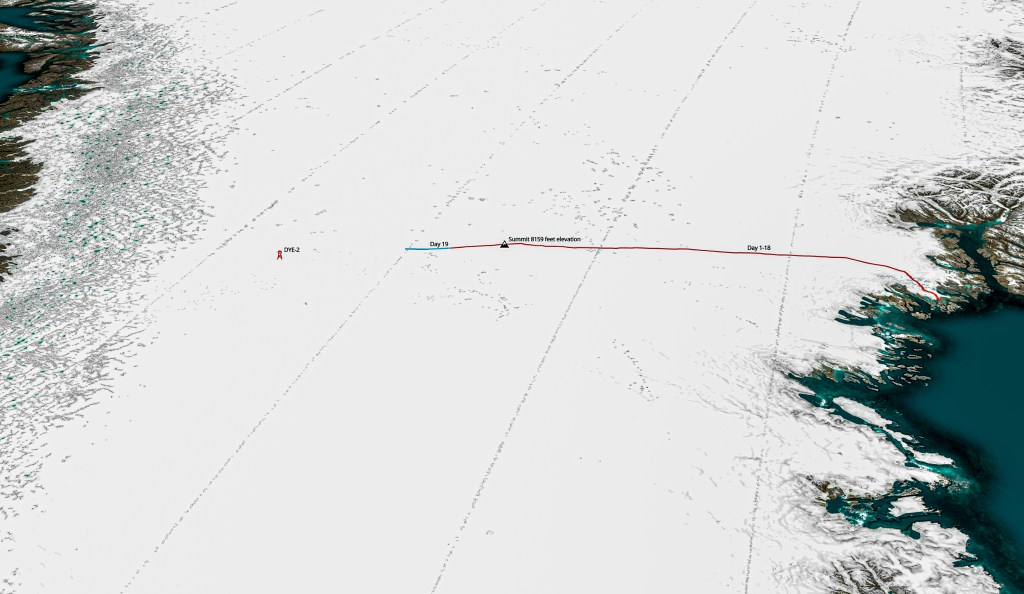
DYE-2 was now 67 kilometers away. Three days at this pace. Let’s not get ahead of ourselves. For now, we listened to the rain and let the stove do its work.


 Alta Backcountry
Leave a comment