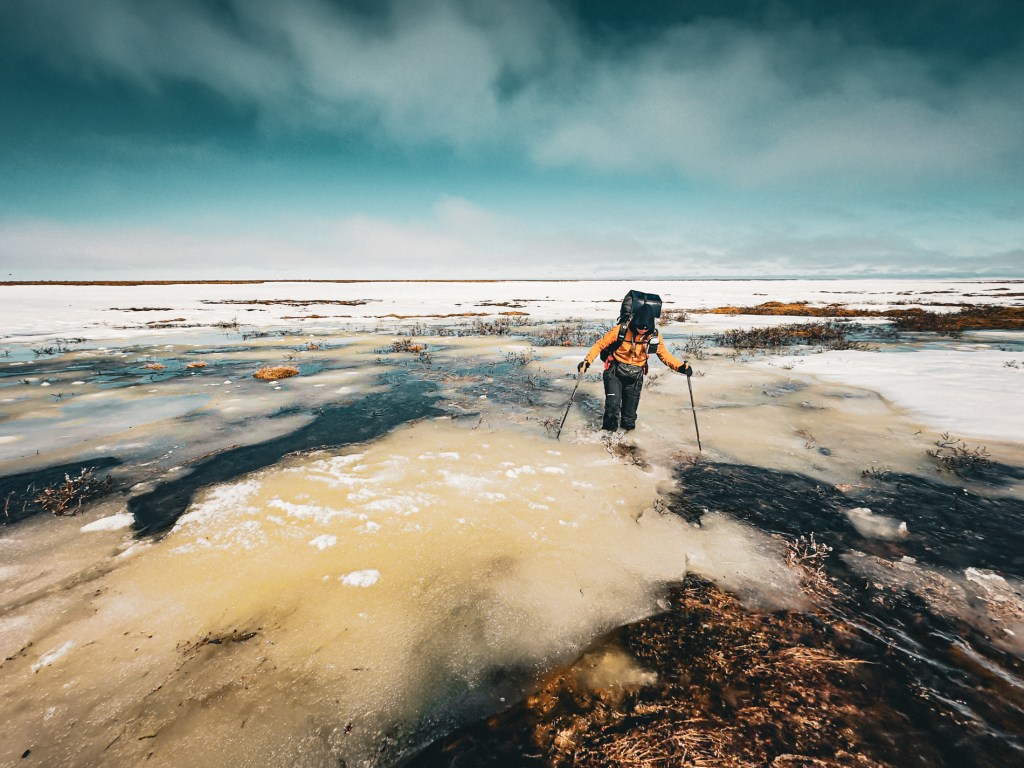
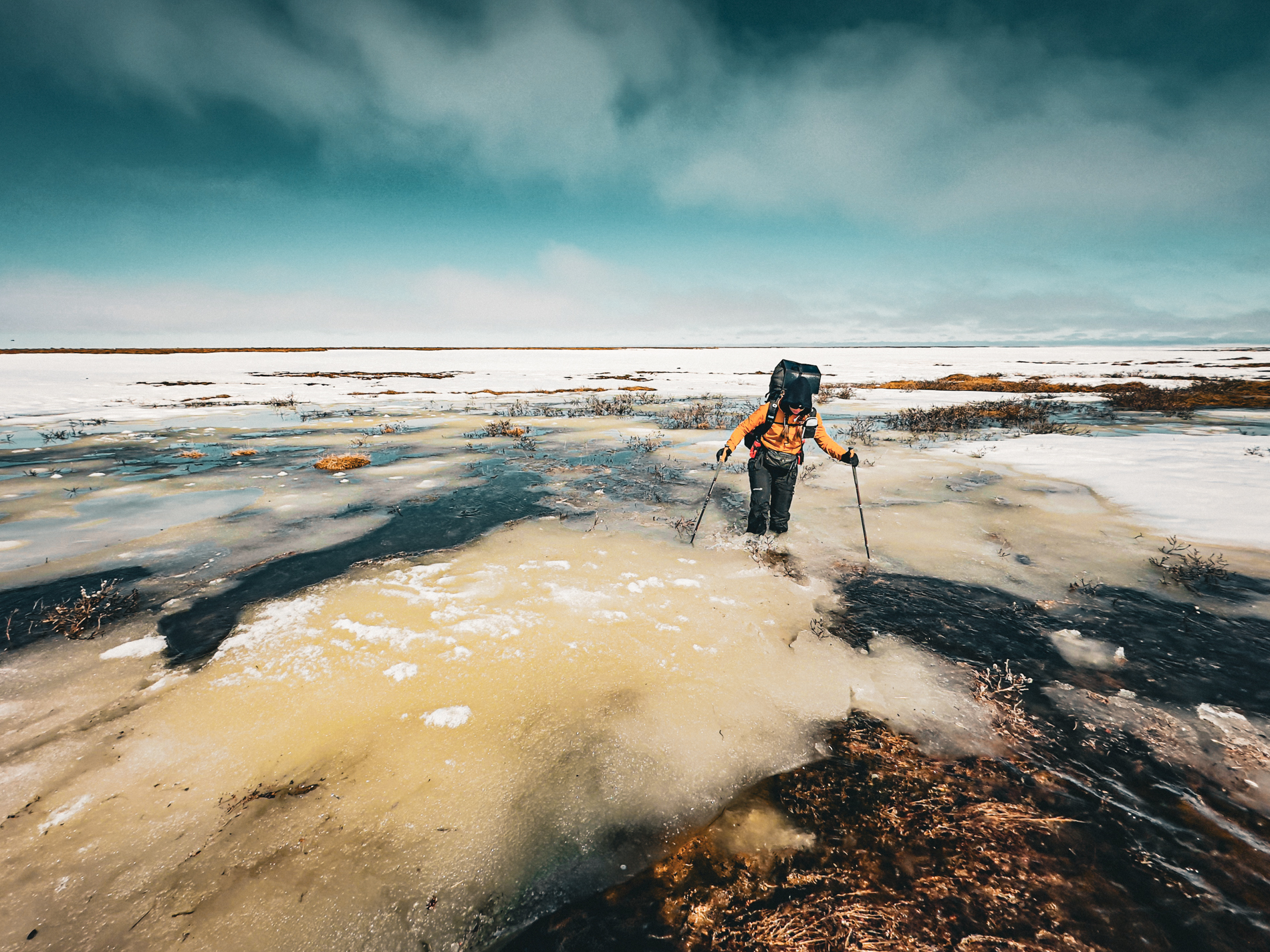
Good news, my sore throat was gone this morning. Glad to have dodged that bullet. Our walk from the Beaufort Sea to the Brooks Range continues, and today, surprise, the sun came out for a brief spell and the cold north wind decided to take a hiatus until the very end of our hiking day. It dawned on me that this upstream walk from the ocean to the mountains is the way the native Inuits who lived on the coast used to travel in search of caribou. This opposite way of doing things feels natural, the way it’s always been done when finding food and keeping the family fed and warm was a priority.
The northern Alaska coast used to be home to many more communities and trading posts. The Inuit Eskimos had good food options from both the sea and the land. It was also a very prosperous – and dangerous – whaling route, one of the last to be ravaged during the whaling era. It was directly on the famous Northwest Passage, bringing many explorers in search of adventure and fame. Today, the only northern coastal community in the United States east of the Dalton Highway is Kaktovik. Katovik is a native community with a military presence. There are several now-defunct Distant Early Warning (DEW) sites on the northern coast, including Kaktovik, designed to let our military know if a nuclear attack was coming from the Soviet Union. It’s an eerie reminder of a not-so-bygone era.
Kaktovik is also one of a handful of native coastal communities that has permission to harvest Bowhead Whales. The community harvests three every fall feeding the village. The less-desirable remains of the whale are set outside the village, which brings in polar bears from the melting Arctic Ocean. Polar bears rely on ice to hunt, and with less ice caused by climate change, those hunts are getting a lot harder and polar bears are struggling. I’m not a huge fan of Bowhead Whale hunting – there aren’t that many left – but the food supplement has led to a healthier polar bear population in the area than exists in most of the Arctic. I’m not sure non-natives can say too much about natives hunting a handful of Bowheads a year either, as we are responsible for decimating whale populations around the world, which severely impacted the prosperity of native communities.
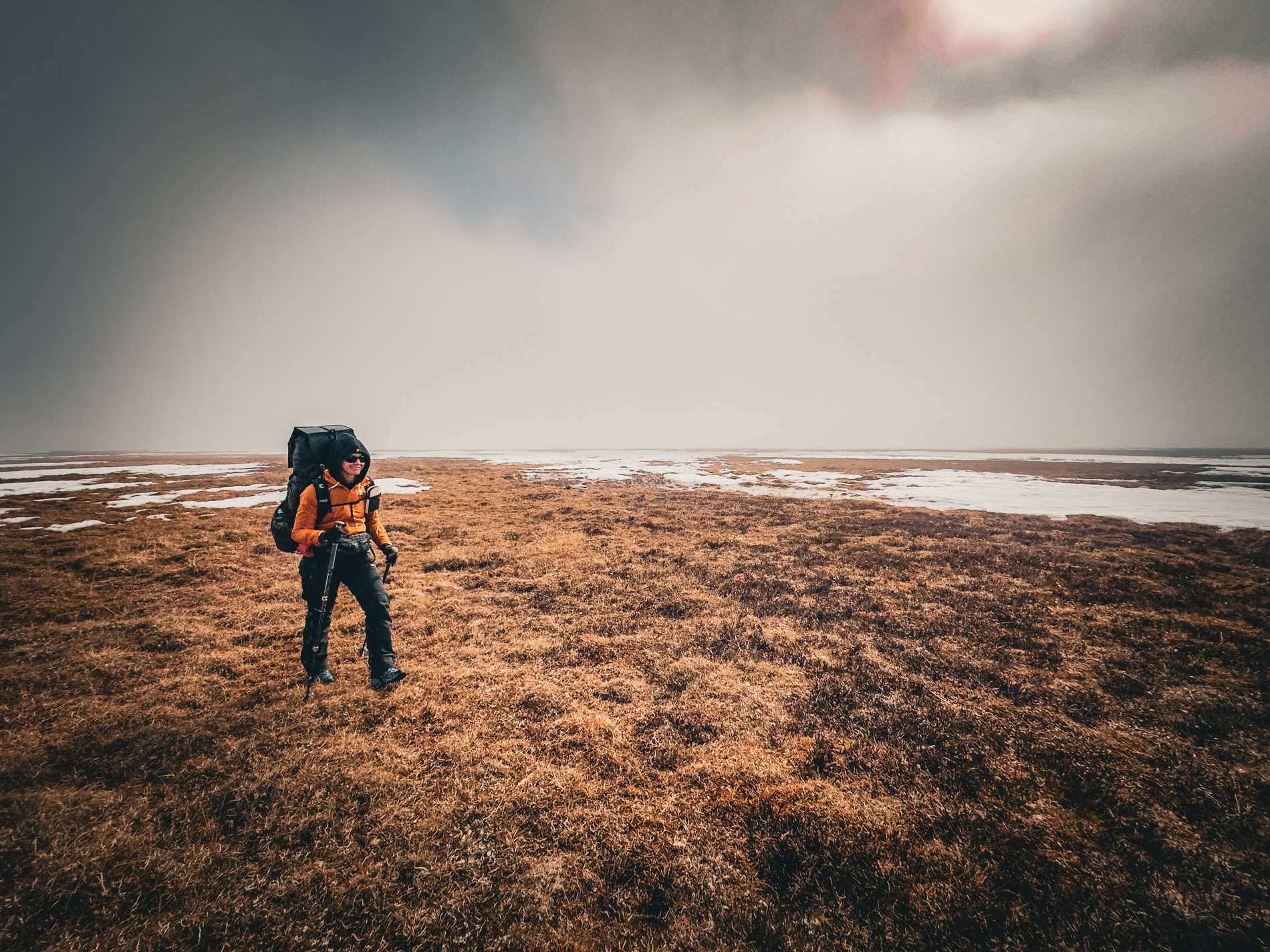

We saw our first mini-herd of caribou today, about a half dozen forlorn-looking animals. Winter at 69° latitude is hard and spring hasn’t arrived yet. The caribou are as depleted as they’re going to get. It’ll be another week or two before vegetation starts to grow and they can start putting on some weight. Of course, the bugs will come out then too, which is what drives them off the coastal plain and into the mountains. Probably more than anything, the bugs keep everything moving. On June 10, however, there are no bugs so the caribou have no real need to move much. Better to conserve energy and preserve what fat stores are left.
The sun cast the northern slope of the Brooks Range in a beautiful arctic light, glistening white and rising straight out of the plain. The sky up here is indescribable. If I try, the words low, expansive, diffuse and dreamlike come to mind, but those don’t do it justice. To know the arctic sky, a person has to see the arctic sky.

While the ground is frozen, I wouldn’t call the walking easy. We enjoyed a cornucopia of walking variations, from dry tundra walking, to squishy tundra walking, to snow tundra walking, to flowing water on top of tundra walking, and our favorite, crusty ice and snow with water flowing underneath tundra walking. There was something for everyone, and every five minutes it changed staving off boredom.
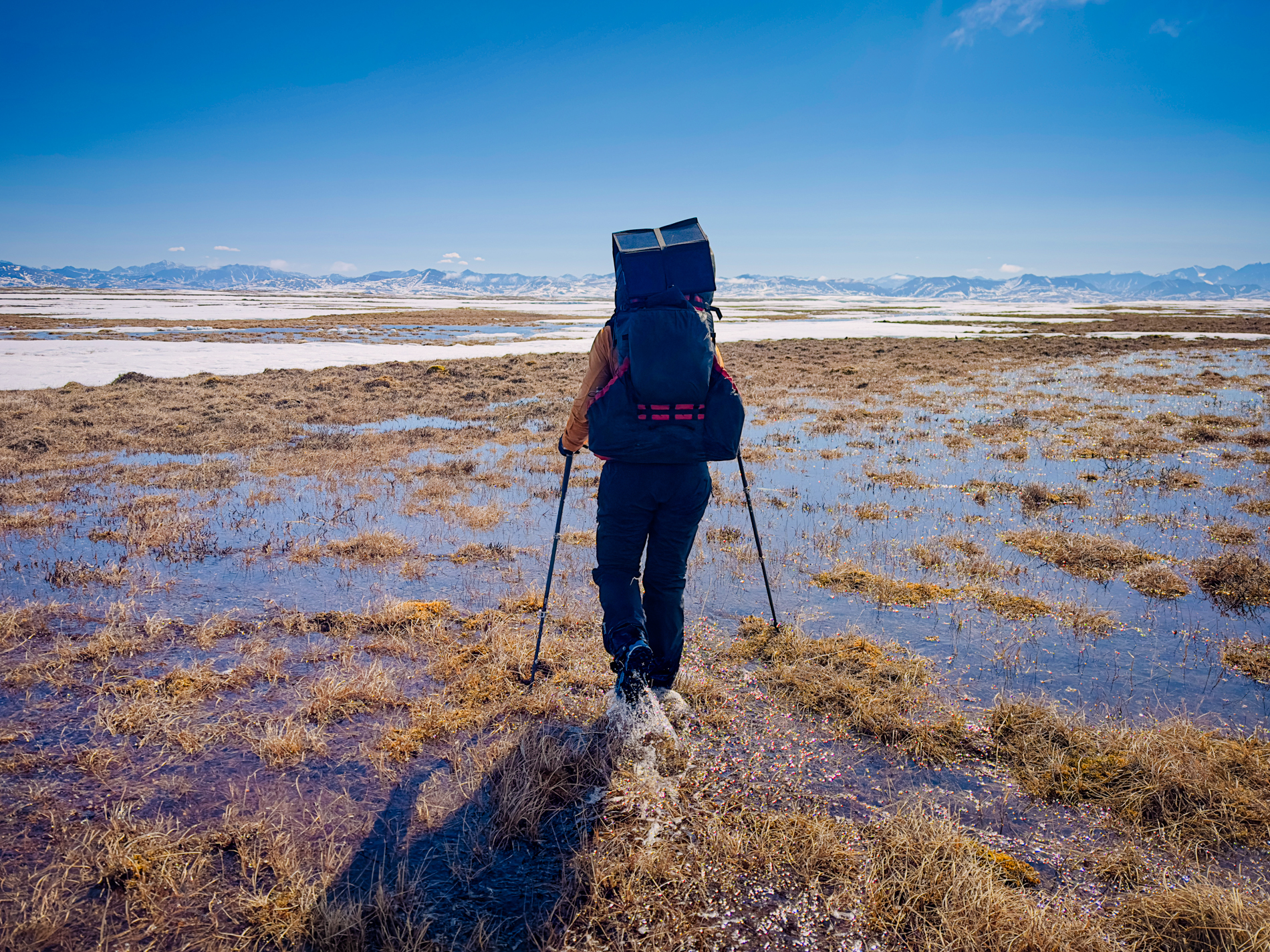

Tongue in cheek aside, this would be real hell to walk a month from now when the tundra turns pillow soft and the mosquitoes go insane. Right now though, the walking is relatively firm, the birds are everywhere and the land is invigorating in the way big open spaces light the human soul. We’re about 30 miles from the coast and out of likely polar bear terrain now, so that’s one less stress. The third day in and we’re finally finding our rhythm out here. I’m getting comfortable with the idea that this is where we live for the next 2.5 months, so there is no point dreaming about the comforts of home. The Refuge is our home, and it’s a darned good home at that.


 Alta Backcountry
Leave a reply to Lisa Cancel reply