There was a big sigh of relief this morning when I woke up and the feet didn’t hurt at all. We had some drier walking yesterday, and we gave each other foot massages last night to loosen up the tendons. That certainly helped.
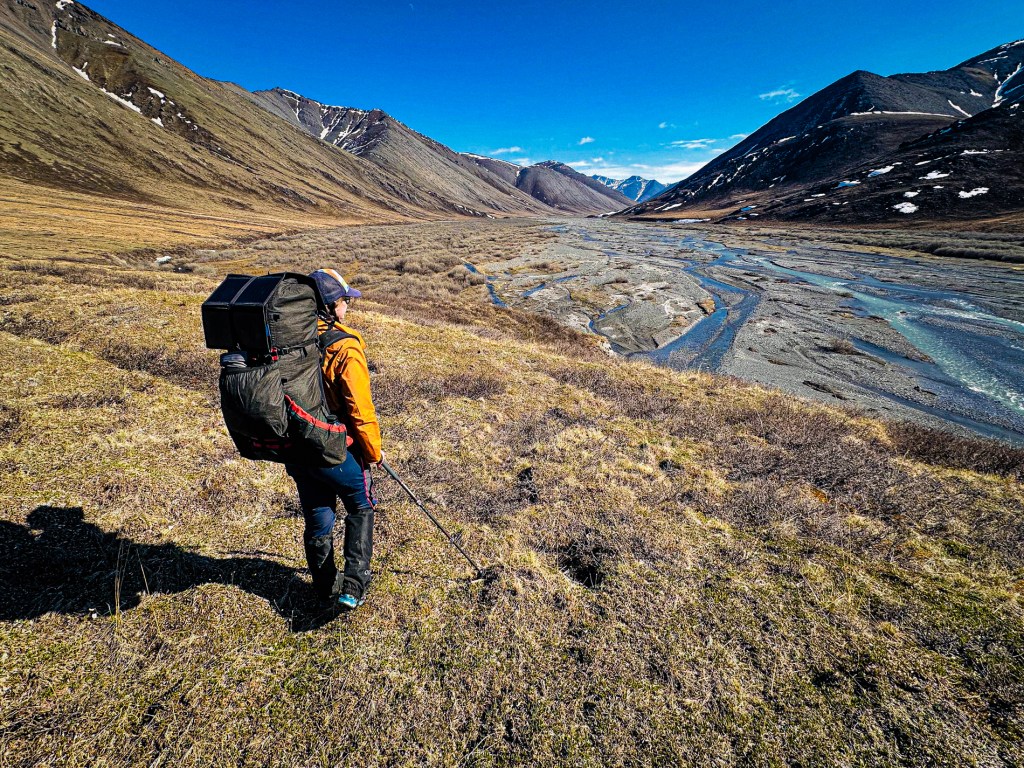
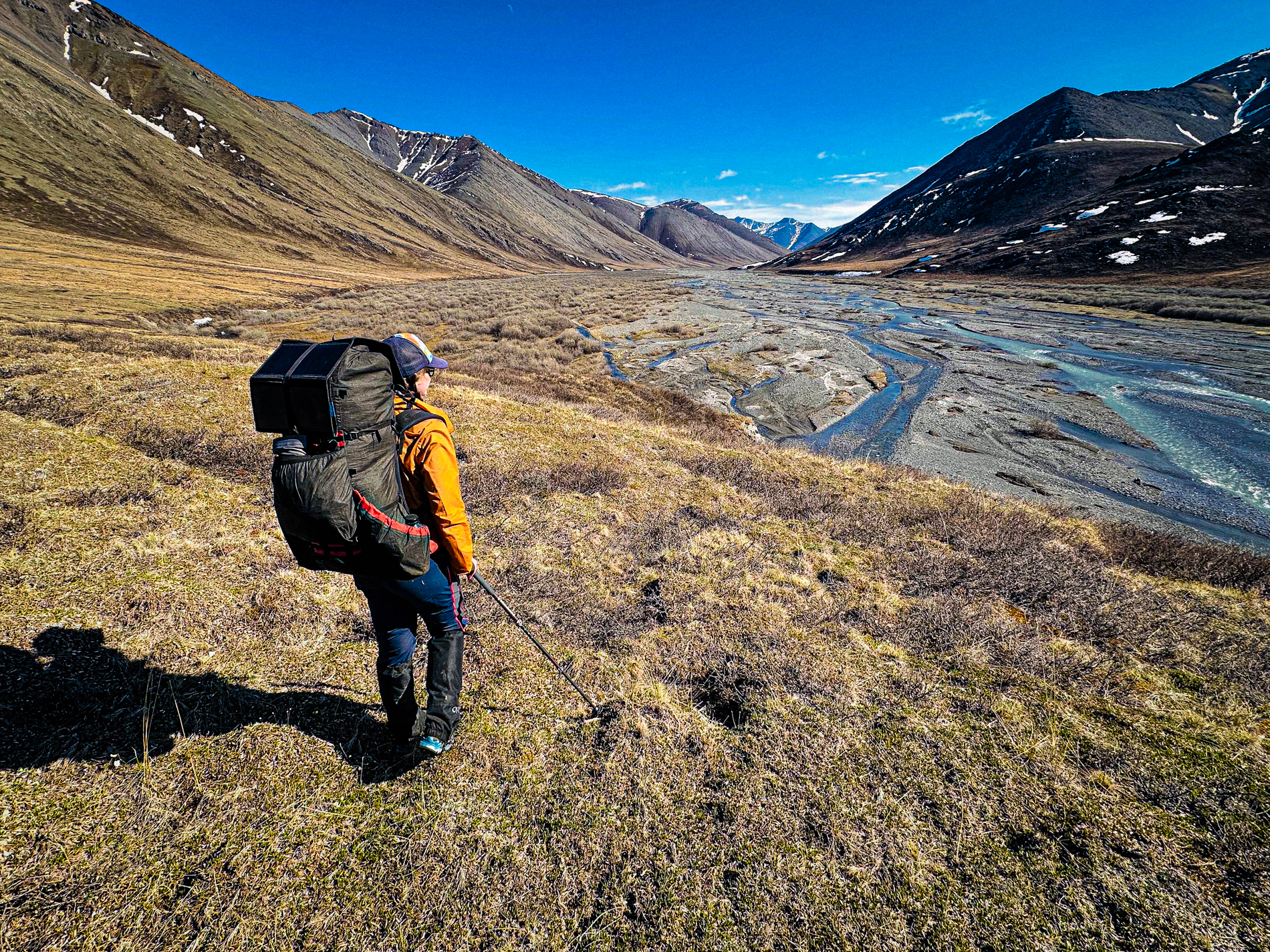
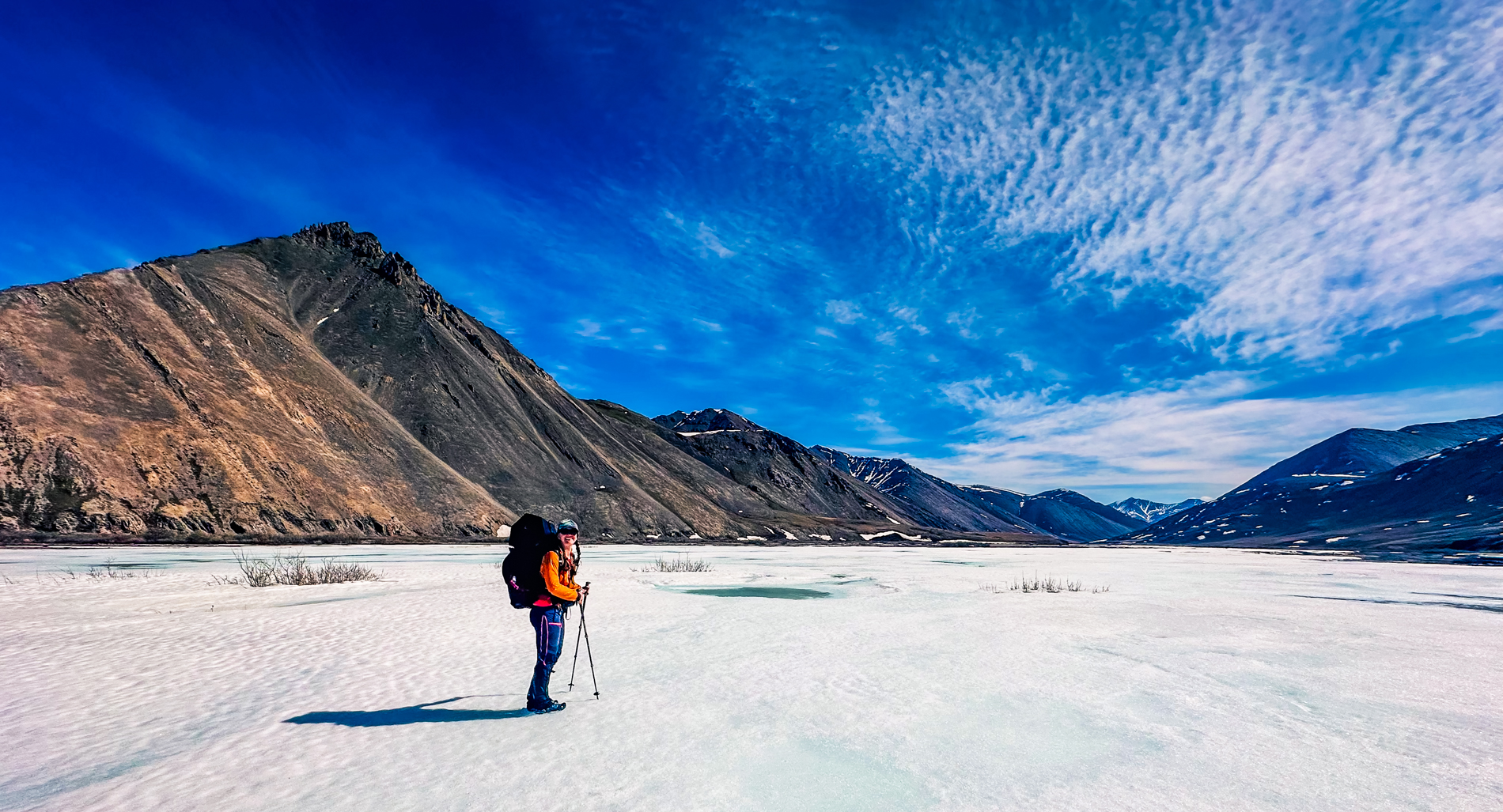
Our good weather window continues. We headed up and over a small pass to the big north-flowing river. We anticipated this being a difficult crossing but it was well braided and surprisingly easy, barely over the ankles in most places. The recent dry weather has helped…this would be a different story during melt-off or a major rain event. No doubt we’ll encounter that later on this 2.5-month odyssey, but we’ll take an easy crossing when we can get it.
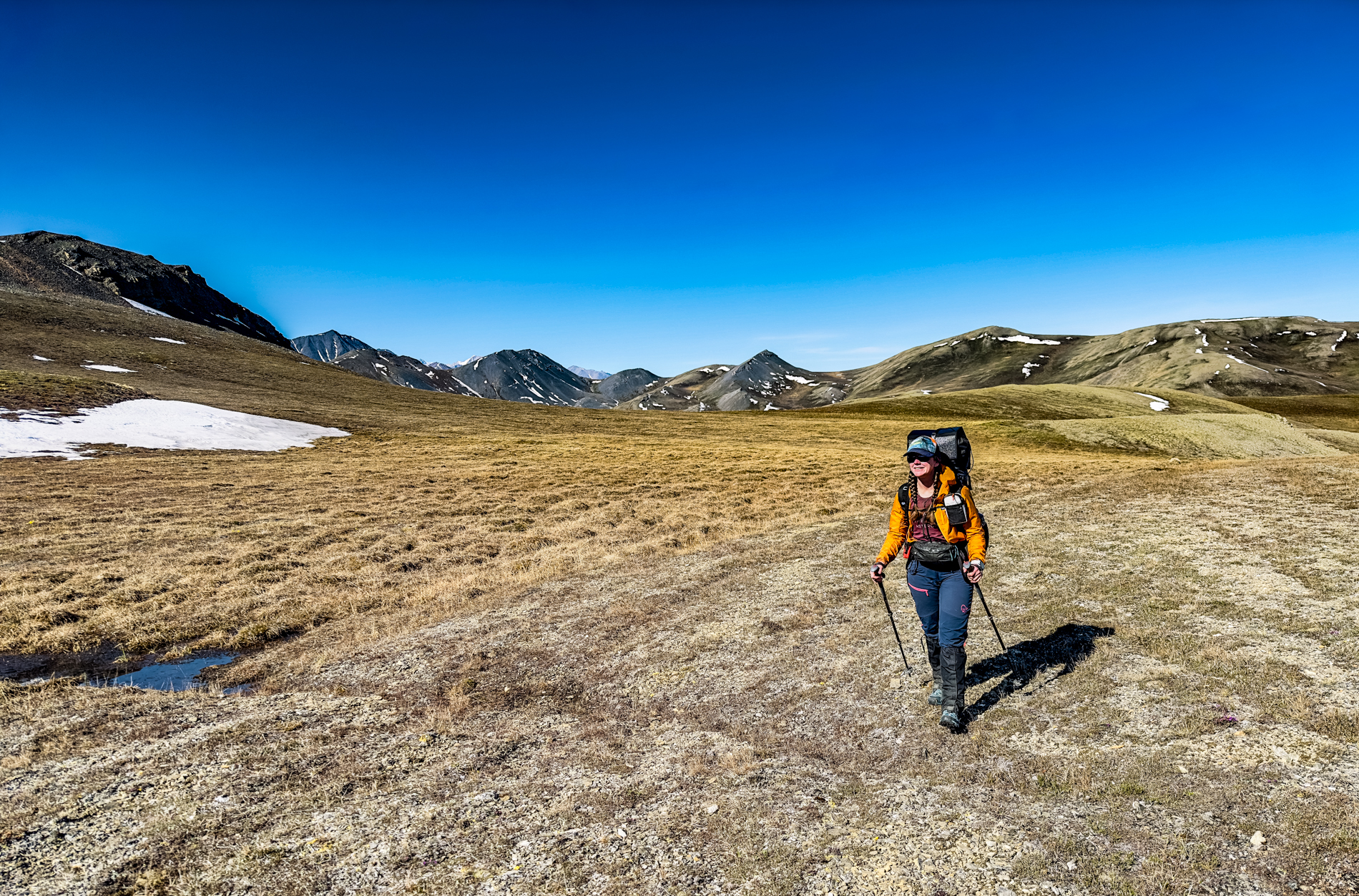
There were lots of small caribou bands along the pass, and they all seemed to be heading in the opposite direction from us, north to the slope. We anticipated they’d be heading into the mountains around now, but the cold weather and lack of bugs might have altered their pattern. We’ll see how this whole “follow the caribou migration” plan works out. If there is one thing I’ve learned about caribou, it’s that there is no understanding of why they do what they do.
This river bed is quite brushy, surprising for being this far north. These north-sloping valleys usually don’t have much vegetation. Climate change is allowing more vegetation to grow in the Brooks Range in general, and a lot of this brush looks like new growth. That’s not great news for caribou who prefer the wide-open tundra.
The best part of today was discovering Inuksuks. Inuksuks are piled stones, similar to modern-day cairns, built by the Inuits thousands of years ago. They were used for navigation, but also for caribou hunting. The rocks are placed every 100 yards or so, running parallel to the river, on both sides of the valley. Inuksuks are especially common in funnel-like valleys. The natives would put fur strips on top of the rocks which blew in the wind. This would spook caribou and funnel the herds into the valley where the natives would then hunt them with bows and arrows and spears.
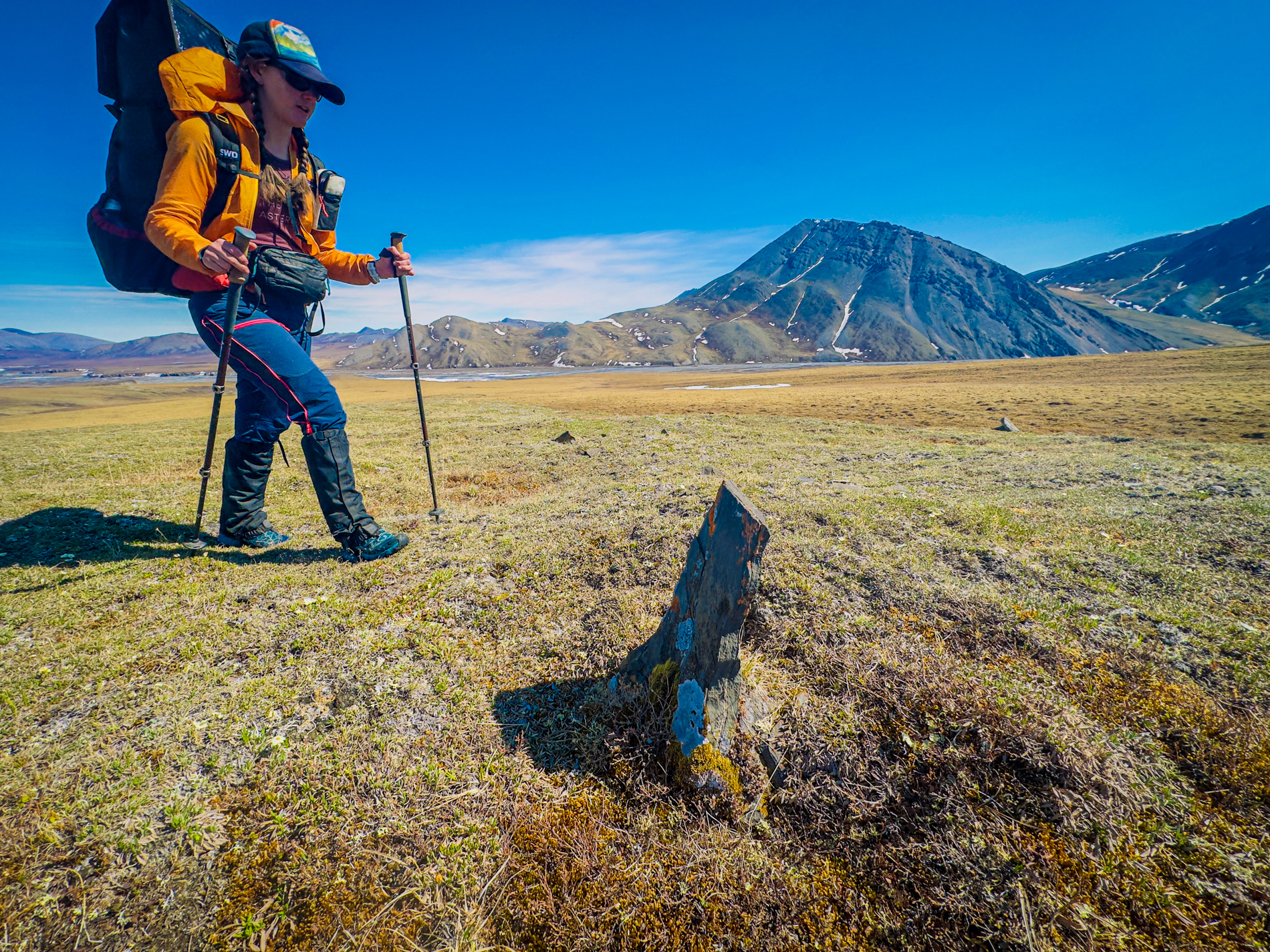
Cairns are a controversial issue in the modern trail community and I agree that massive cairns on trails are silly. But on open tundra, when the fog and snow meld into one horizon, a cairn can be the difference between life and death. And, in the case of the Inuksuks, they were a tool for hunting and feeding the tribe. There is an interesting book called “Cairns: Messengers In Stone,” by David William that gives a great historical perspective about cairns and Inuksuks.
The worst part of today was finding out on the InReach that some good friends of ours were going through a break-up. We feel bad about not being home to offer them support, and a 150-character text message doesn’t do justice. Last year we found out one of our dearest friends lost their child while we were hiking – we had no idea till we got back to Fairbanks. We love being out here more than anything in the world, but it does sometimes take us away from important things in that other world. On the other hand, we need these trips to be whole, we need the silence and the ability to get grounded after the onslaught of running a ski shop all winter, and if we don’t take care of ourselves, it’s hard to be the best, empathetic, compassionate human beings we can be. That said, sometimes it’s hard missing stuff.
We had another wood burn tonight and spent the endless evening light identifying all sorts of birds. American Robins and Common Redpolls were singing and darting through the low brush and short-billed gulls were dive-bombing us while we ate. Gulls like to heckle us when we are anywhere near the river, swooping and circling while singing a call that sounds like, “hahaha, hahaha.” The American Robin has one of the prettiest calls, a beautiful, whistful song, with 7-9 different notes per call. We let the fire burn down, watched the river roll by, listened to the birds and tried to send the peace of this place back to our friends.


 Alta Backcountry
Leave a reply to Anonymous Cancel reply