
On our way to the cache we had our first bear encounter of the trip. A large, male grizzly was feeding along a small creek bed directly in our path of travel, unaware of our presence. We debated trying to sneak around it on the other side of the valley, but doing so would put us in deep brush. We decided to stay high holding our course. We did a bear call and the bear did the familiar thing, getting on its hind legs and sniffing our direction to figure out what we were. Bears don’t see well, but their sense of smell is impeccable. It ambled slowly to the other side of the valley, away from us, with no particular urgency.
Nevertheless, it was disconcerting to see a bear so close to our cache, and when we arrived, we saw our barrel had been knocked over and pushed around. No harm done, but clearly, this bear does the rounds in this valley. Since we’re not going into town this trip, we’re spending longer at each cache. The cache days are much needed and anticipated rest days, so this bear’s presence is something to be concerned about. Hopefully, we won’t have any problems.
It turned out the bear was no problem during our rest days, as he must have continued up valley savaging for food. Evidence of his presence was everywhere, with scat and tracks in all directions. This cache is clearly a popular sheep hunting spot, with piles of bones and massive fire pits scattered about. Not exactly leave no trace.
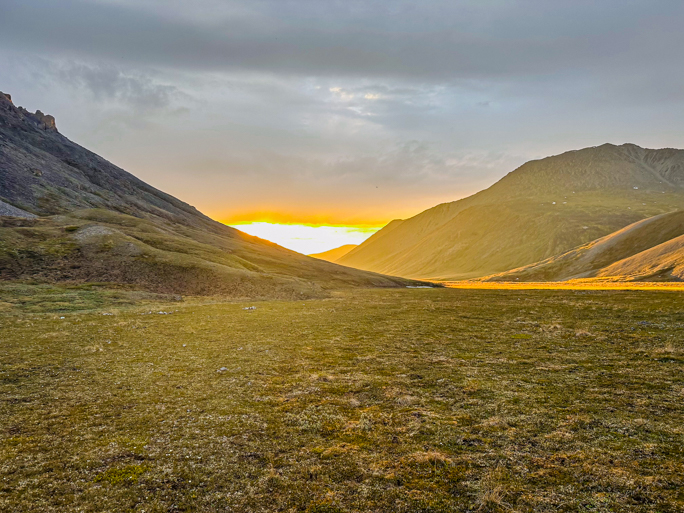
The sun was brilliant and felt like it was drilling a hole through our heads. The only respite was between 10 pm and 2 am when the sun briefly tucked behind a ridge. Then at 2 am it would come around the ridge and shine directly in the tent, baking us for the next 20 hours. Caches tend to be near landing strips, and landing strips are located where there is dry ground without much vegetation. This makes for good plane landing, but not such good rest when the sun is blazing and the shelter feels like a greenhouse. We made do, but it wasn’t comfortable. I got dehydrated the first afternoon and spent the next day drinking lots to recover.
Arctic ground squirrels abound! They are friendly characters and like to come right up to our shelter (and sometimes inside) begging for food. They’re a bit ruthless, scurrying the hillside above our camp searching for bird eggs while the mother birds try to fend them off. They’re just hungry, like the rest of us. Can’t blame them for that.
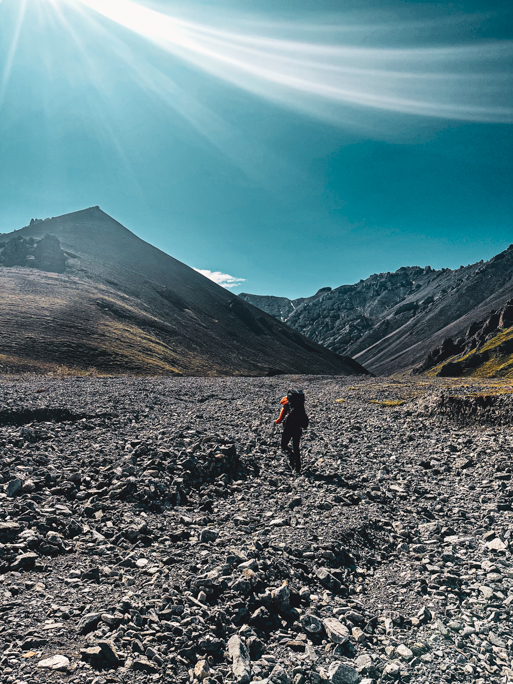
After a couple days stocking up on more food and refilling supplies, we left the cache for part two of our trip. This will be a serpentine loop into some of the lesser visited sections of the range. Of course, by lower-48 standards the entire Brooks is “less visited,” but for this part of the trip we are basically going to places on the map that nobody has any reason to go to. They are difficult to get to, with routes that don’t really lead anywhere.
It seems these days everything is so goal-oriented: do this hike, or this traverse, preferably as fast as possible. That is not our goal on this trip. This is a wilderness immersion, and while it won’t garner the attention or accolades of some of our other adventures, we think it will be deeply personally rewarding.
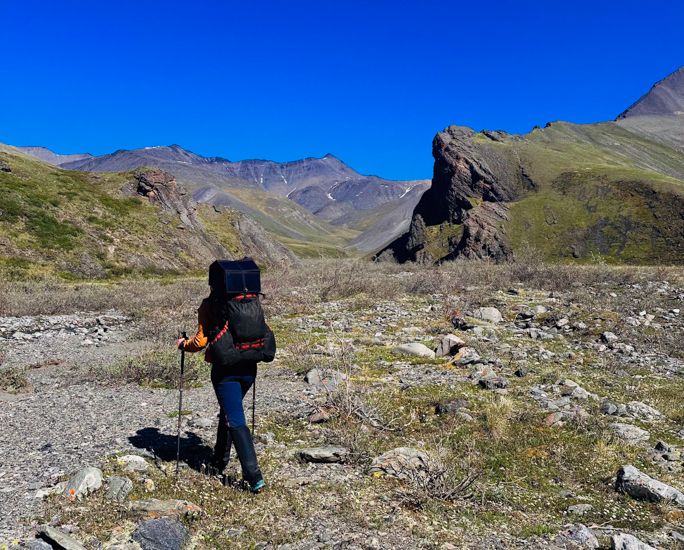
Our first day out of the cache was a short out of necessity. To go further would leave us in a no-mans-land of high mountain passes. Instead, we enjoyed a meandering hike up a pretty canyon and ascended into something we dubbed “the other gates of the arctic.” This consisted of two giant cliff walls that acted as a gate into the more remote mountains beyond.
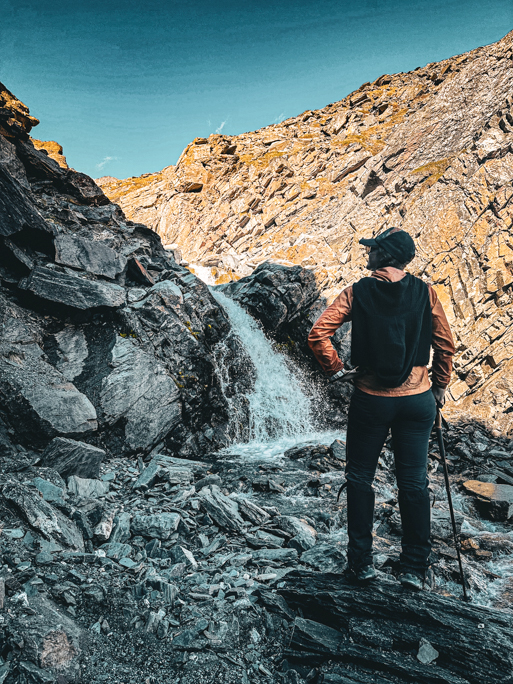
We hiked to the base of a giant pass and scoped out the only flat tundra spot for camping. Tomorrow will be a big day getting up and over this pass to camp-friendly ground, but for now we relax. We hiked up to a waterfall behind our camp, and enjoyed a dinner on the tundra watching a massive golden eagle ride the air currents of the high peaks and valleys to the southeast. In fifteen minutes time, I don’t think the eagle flapped its wings once. Nearby, snow buntings dart between the tundra and a sheer cliff wall in front of us, tucking into nooks and feeding their young in well-protected nests.


 Alta Backcountry
Leave a reply to Anonymous Cancel reply