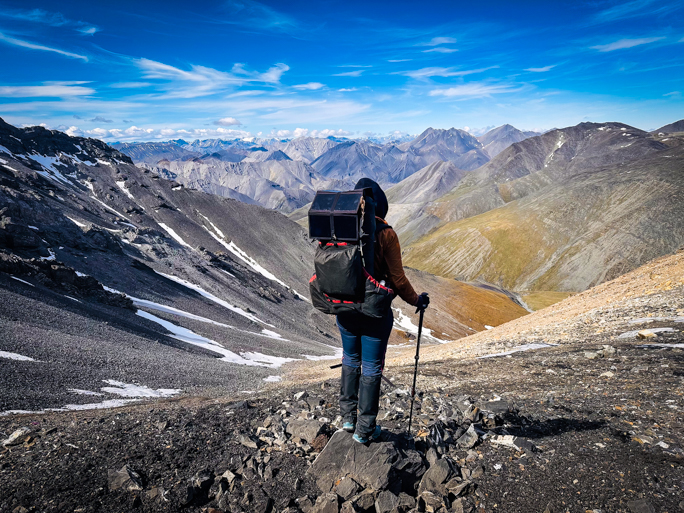
November 6, 2024 Note: Given the events of yesterday’s election, I feel a higher sense of urgency to tell the story of the Arctic National Wildlife Refuge, for this is the very spot where President-elect Donald Trump wants to drill to lower the price of gas. It is a singularly unique place, the last great wild place on the planet I believe. We spent 70-days there this summer, and given recent events, I plan to document each one. There are people out there who know the refuge better than we do – Roman Dial for example – but not many. This is the place, this is our story.
Today is the summer solstice. Days of the week mean nothing out here, but the solstice is something to recognize. It’s our first marker, a passage of time, something to break up the endless, rolling days in this wild land where the sun never set. From here on out, the days will be getting shorter, although we won’t experience a true sunset for another five weeks or so.
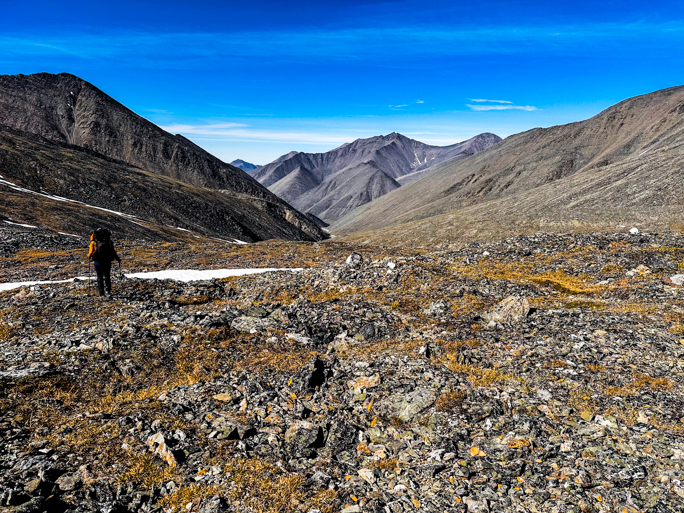
We started the day with a 2,000 vertical foot climb up a pass, never easy with a full ration and heavy pack on our backs as we have now. The climb started as a grass slope before turning to loose rock and dirt, which was more difficult because traction was less good. Unlike passes on the Colorado Trail or Continental Divide Trail, there is no path, and as such we tend to go straight up. It was a hell of a way to start the morning. After what seemed like endless time, we finally crested the top and were regaled with views across eastern Alaska into the Yukon Territory. Mountain range upon mountain range drifted as far as we could see into the horizon. Above us, the sun raged and a golden eagle soared.
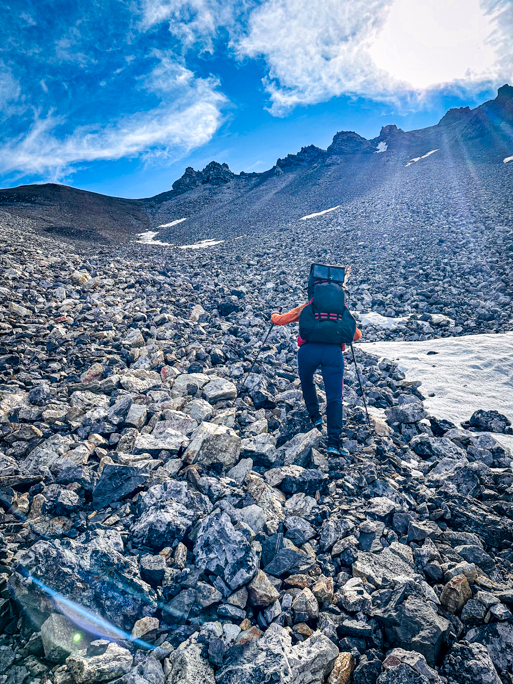
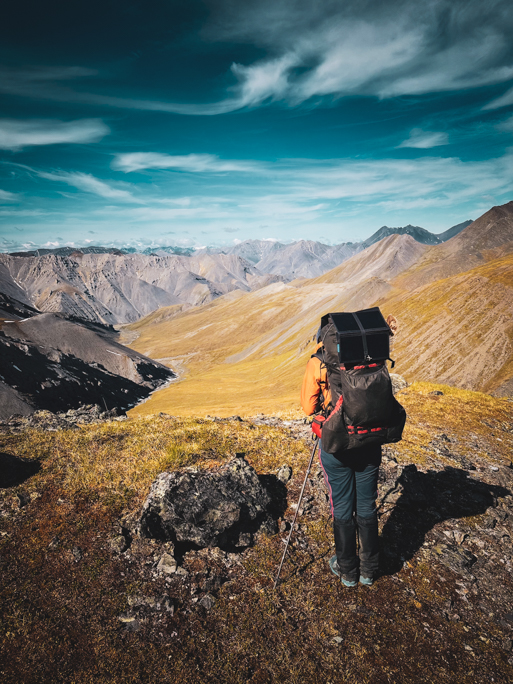
We made our way down a tricky, steep gully and took our first break of the day, at which point the summer solstice hit at 12:51 pm. I sort of take responsibility for noting these events whatever group I’m with. During our Greenland crossing I paid close attention to the exact location of the Arctic Circle, skied ahead of the group a bit, drew a line in the nondescript snow, and let everybody know when they crossed. When we hiked the CDT I made a point to find the exact source of the Missouri River, deep in those mountains on the Montana/Idaho border. Quite dorky I suppose, but I feel a great sense of place while out in the wilderness, and don’t want to let those important moments pass unnoticed.
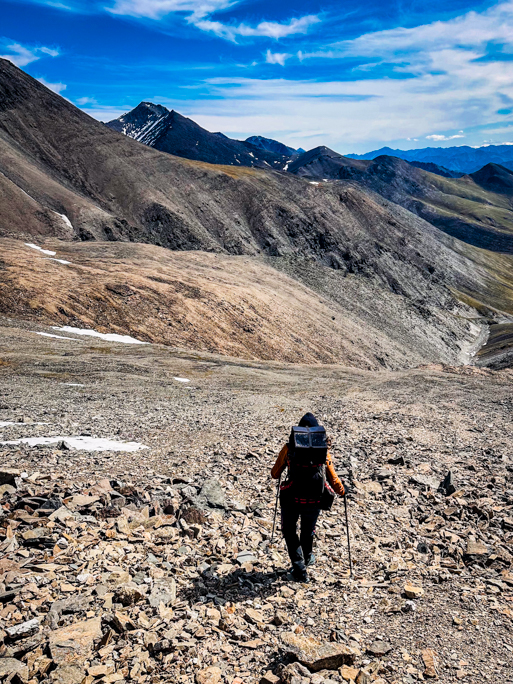
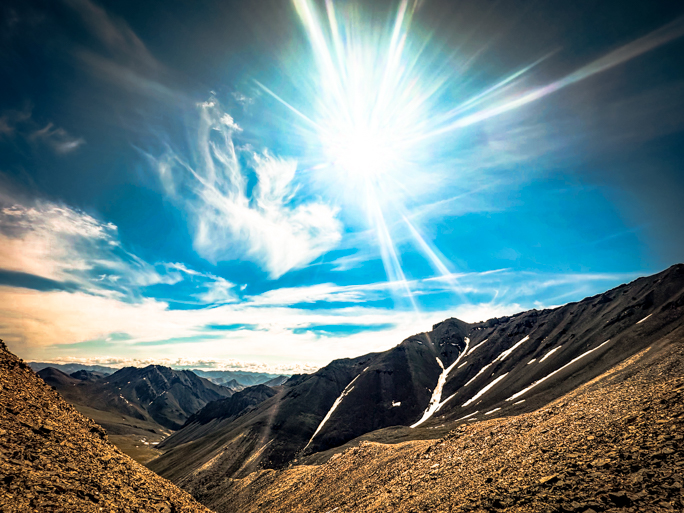
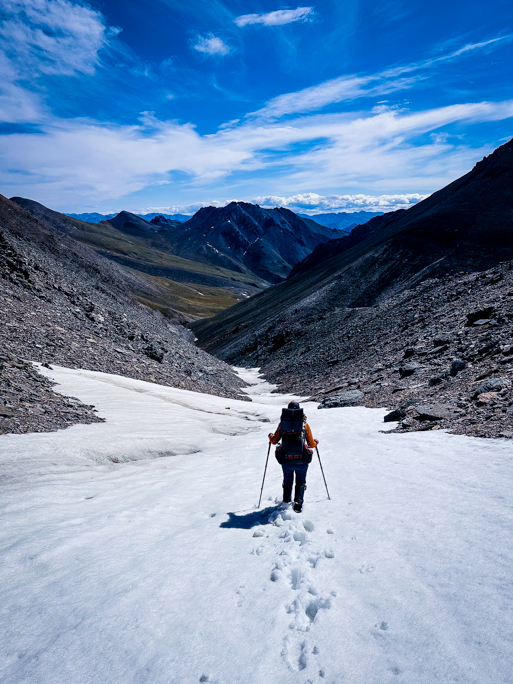
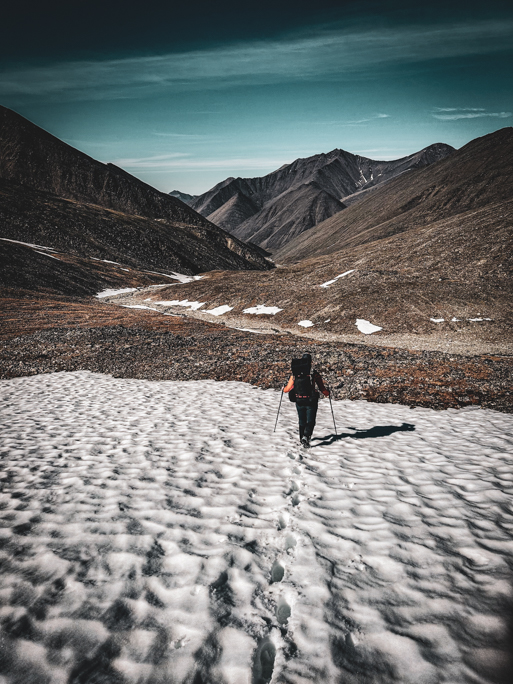
After break we continued down the pass. The gully we were hiking down accumulates deep snow during the winter, and even now in June it was snow-covered, which offered nice walking, surprisingly good traction and a break for the sometimes achy knees. Knee pain is an interesting thing in that we both feel it early in these expeditions until we get stronger, and then it goes away. The body’s ability to adapt never ceases to amaze me. It can do a lot more than we think it can.
We continued down the snow gully, occasionally popping back up on the ridge where the creek underneath the snow eroded it to dangerous drop-offs. Finally, the descent ended and we enjoyed some delightful, stress-free tundra walking on perfectly firm, non-rocky ground.
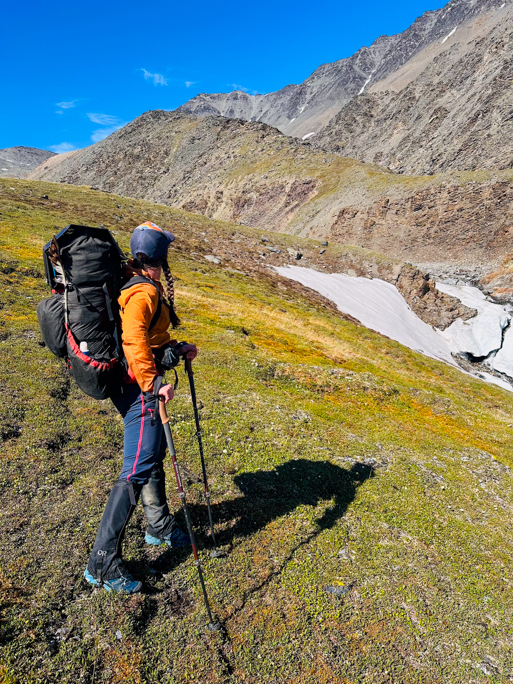
We headed north up a valley, eyeing on the topographical map what looked like a short but steep climb to the next pass. We weren’t 100% certain this climb would go, and if that was the case we’d have a much longer day ahead because there was no easy way out of this valley. The wind was ripping down the cirque, so we took a quick break behind a massive erratic that blocked the wind. Erratics are large rocks deposited in valleys by glaciers from the last ice age. Based on the chilly temperature during our break, that last ice age felt like about ten minutes ago.
We ended the break and headed to the base of our pass. It was completely snow-covered and quite steep, maybe 30 degrees overall with a crux move at 40 degrees steepness and 100 yards long, no joke, especially with soft-toed hiking shoes in an environment where rescue was at least 48 hours away (if at all). Nevertheless, it looked doable and within our ability range. Since I led us to the top of the previous pass, Elaine took the lead on this one.
Elaine is as solid as they get on snow with years of ski mountaineering experience, and it was with a lot of pride and confidence as I watched her kick bomber steps straight up the gully, traverse the top section gracefully and top out with ease. It’s a wonderful thing having a competent partner, and when that partner is your wife, even better.
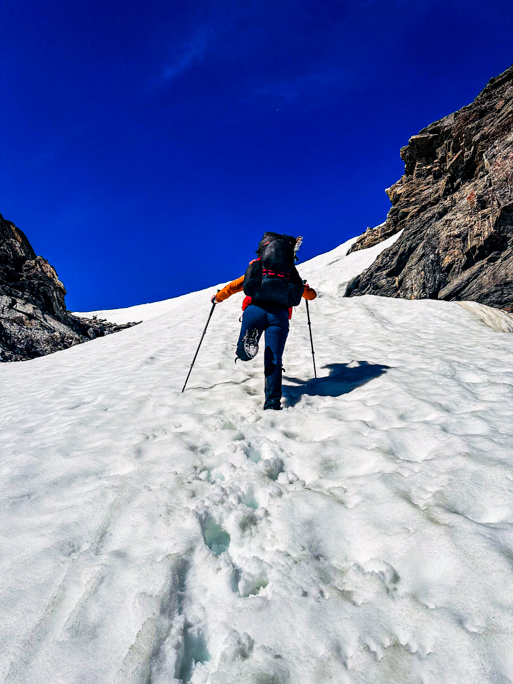
It was quite nervy following behind her. The snow slope had a slight off camber to the left, and slipping that way would lead to a sharp ravine that I wanted no business with. More concerning, the middle of the slope had an overhanging drop-off to the right, which made me concerned that the whole thing could collapse which would definitely be bad news. But it held, and it was with a great sense of relief that we both reached the top and continued on our way.
After that adrenaline rush, we figured it would be smooth sailing to the bottom of the valley where we hoped to camp, but no such luck. The pass itself was simple and flat enough to land an airplane on, but the descent was an endless maze of rocks and boulders that took a lot of mental focus to lead through without getting cliffed out. This was tiring terrain and at the end of the day it was mostly a battle in mental toughness. After a couple hours, we finally made it off this rock-hell bench down to the creek bed, where we debated taking a rest break, but for some reason did not. That proved to be a good decision.
We took a few more steps and saw a small, somewhat chubby grizzly coming directly at us up the creek. It was quite small and we weren’t sure if it was a cub with a mother behind the ridge directly above us, which made this a nerve-wracking encounter. Like most young grizzlies, it was curious, and I must say this is the closest I’ve come to describing a grizzly I’ve encountered in the wilderness as “cute.” It really was an adorable fluff-ball, but on the other hand it was a grizzly bear and who knows where the mother was. I reluctantly tossed rocks in its direction, which discouraged it from following us. Honestly, it seemed young and new to the world. I wonder if it was an orphaned cub or just recently kicked out of the home by mom. We continued down the pass, checking over our shoulders every few minutes, but it was now heading the other direction towards a life in the deep, wild, northern mountains.
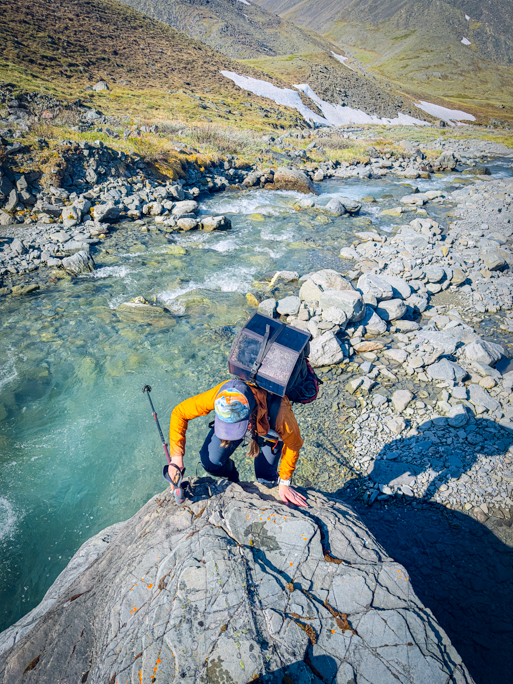
As the day went on, dark shadows and cold engulfed the canyon, and it was relief when we popped out the bottom to an intersection with a great river that flows north to the ocean. Three tributaries of this river joined here, and ahead of us a sunny, tundra vista rolled away like a museum diorama from the Pleistocene Era. Except, this was no museum, this was the real thing. Three valleys broke away from this meeting point of rivers, and in the opposite direction towering mountains rose into the sky.
This is a special place, so we enjoyed a wood burn dinner while mosquitoes lazily circled our heads, making their presence known for the first time this trip. I suspect we’ll have one or two more nights of bug-free camping before they show up in force. It’s 10:35 pm, the sun is shining brightly at us from the northwest, and all is good in the last great wilderness on earth.


 Alta Backcountry
Leave a reply to Anonymous Cancel reply