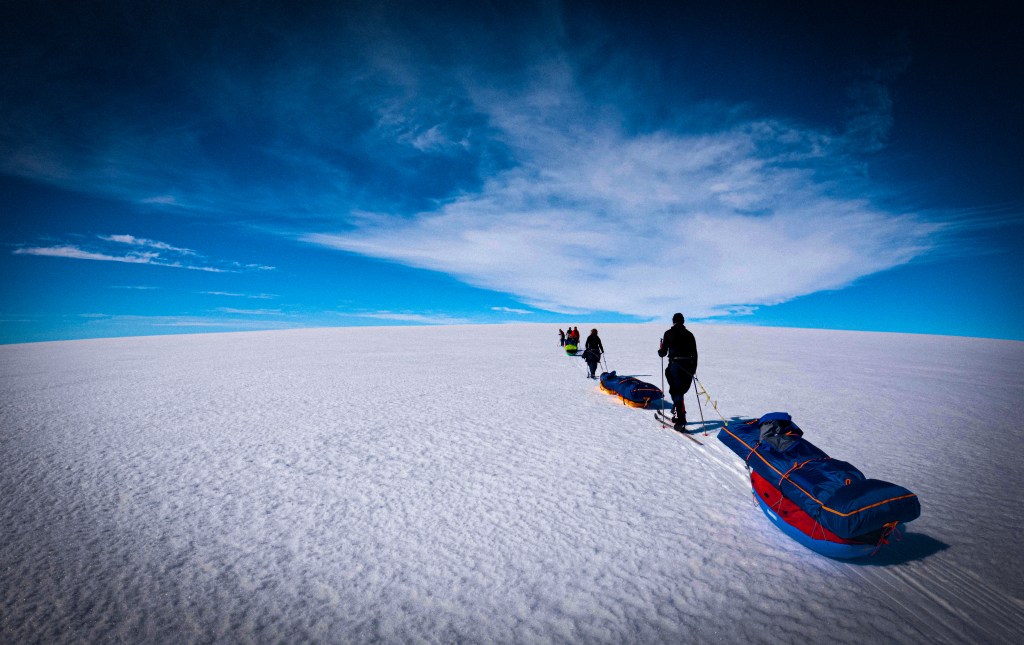
August 19. 18.5 km, 1,333 feet of climbing.
We woke to one of those days that feels like a gift. Blue sky, light clouds stretched thin and high, and temperatures warm enough to make you question your layers. Ahead of us was the transition we’d been working toward since stepping onto the ice: the icecap proper.
The change was immediate and welcome. Smooth snow. Consistent texture. Real glide. After days of broken surfaces and careful footwork, skiing finally felt like skiing again.
The day started with a reminder not to get complacent. Right out of camp we threaded through a complex crevasse zone that forced constant zigging and zagging. We were still on kicker skins, great for glide and less forgiving when grip matters, and the terrain made that choice feel questionable at best. In several spots a ski would bridge a narrow slot while the skin hung uselessly over open air, offering no traction at all.
Elaine led from the front all day and handled it beautifully.
Being lighter made the crevasse sections trickier for her, especially with a loaded sled tugging from behind. Progress often required aggressive herringbone steps to muscle the sled up and out of depressions, but she stayed composed, deliberate, and calm. Watching someone manage that combination of navigation, balance, and strength for hours at a time is impressive, even more so when it looks unforced.
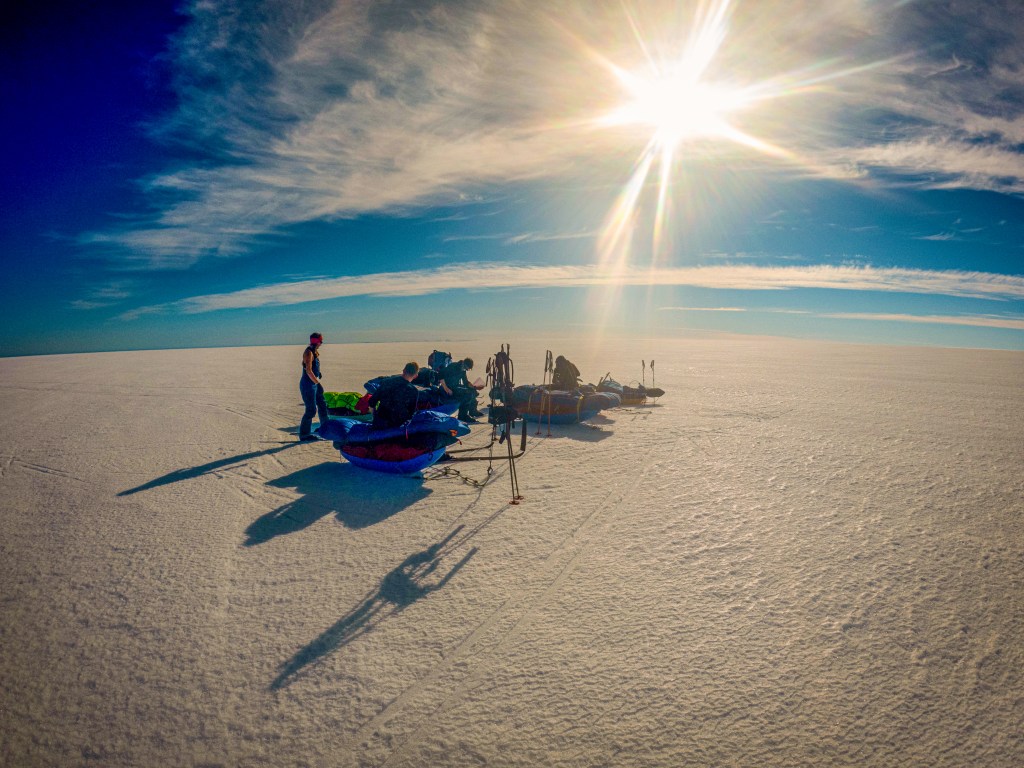
Navigation added another layer of complexity. One of the compasses was giving inconsistent readings, likely interference from the chest harness, which made holding a clean line difficult. After the crevasses thinned, I moved into second position for the final pulls, acting as a rudder behind Elaine. With the heading checked against her bearing, the line snapped into place.
On the map it is almost comical how straight it became.
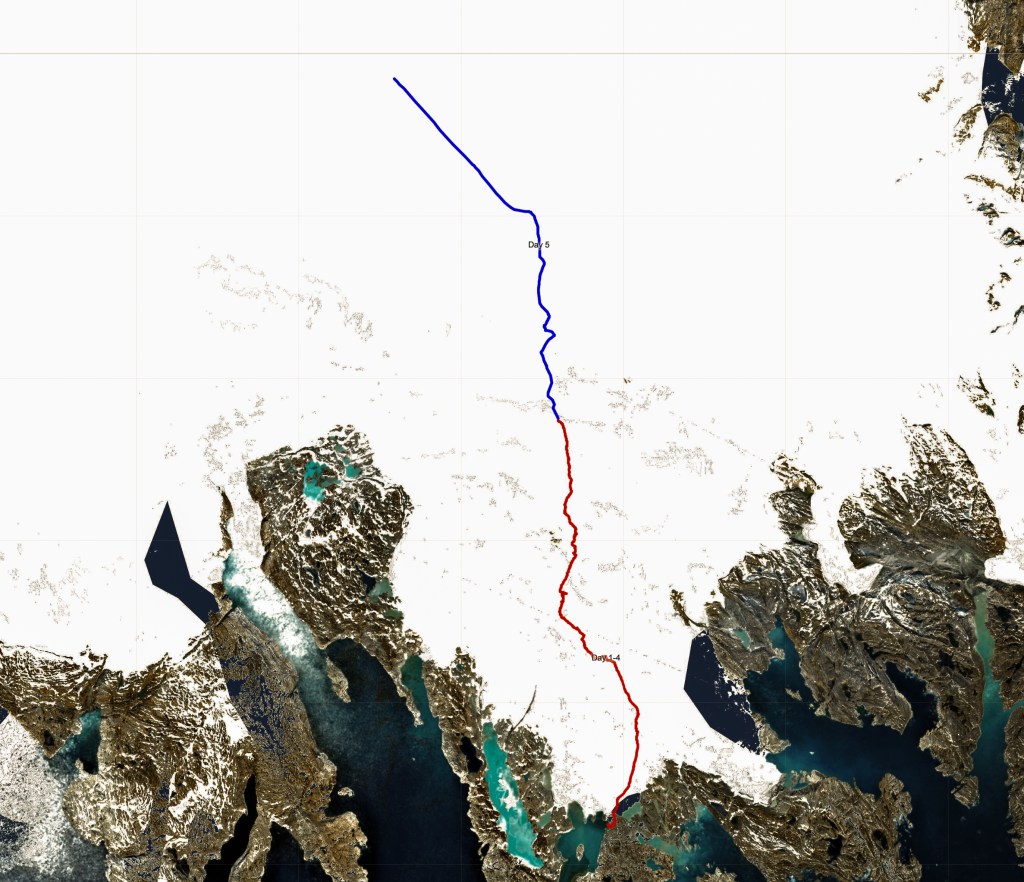
We covered ground efficiently and made excellent time on our biggest day yet. From where I stood, the group stayed together well. Everyone moved smoothly. Breaks were regular. The system worked.
Still, small things surfaced. Comments about pace. Subtle shifts in energy. The kind of signals that do not mean much in isolation but linger in your awareness. Group dynamics on long expeditions are rarely static. Even on good days, currents run underneath the surface.
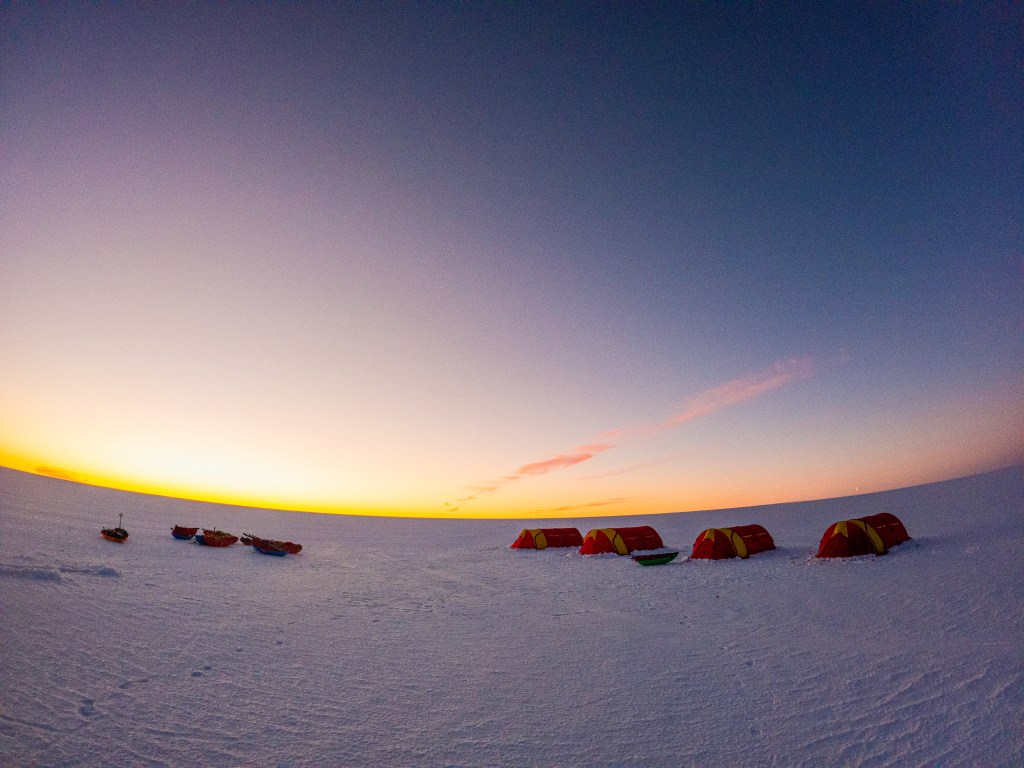
By evening we were camped high on an endless plateau at 4,622 feet, tents glowing red against the white. No wind. No sound. A storm was forecast for the following day, but for now the icecap felt vast, calm, and almost benevolent.
It was, unquestionably, one of the best days of the trip.


 Alta Backcountry
Leave a reply to Fran Vardamis Cancel reply